Can Ayatollah Ali Khamenei be pro and con nuclear weapons at the same time?
True Reason for Iran’s Apparent Interest in Nukes Discovered
read more

Can Ayatollah Ali Khamenei be pro and con nuclear weapons at the same time?

Muammar Gaddafi’s misuse of governmental instruments and assets for over 42 years has left a gaping political vacuum, a severely impaired civil service, and a virtually non-existent civil society in Libya. Decades of intentional manipulation of state resources and a gross mismanagement of oil revenues have led to immeasurable social exclusion. According to the UN, over 40 percent of Libya’s population of 6 million lived below the poverty line under Gaddafi and reaped no direct benefit from its monumental oil riches.

“To strengthen Iran sanctions laws for the purpose of compelling Iran to abandon its pursuit of nuclear weapons and other threatening activities, and for other purposes,” begins HR1905, the so-called “Iran Threat Reduction Act” advanced by the U.S. House Foreign Affairs Committee this week. The resolution, put forward by the chairwoman of the committee, Florida Republican Ileana Ros-Lehtinen, has 349 co-signers, more than enough to pass a House vote. It will increase sanctions on Iran and limit U.S. contact with Iranian officials, and pressure to enact it will be strengthened by the release of a November IAEA report asserting that Iran has been secretly developing nuclear weapons (and a delivery system for them) since 2003.
While neoconservative commentators were declaring that diplomacy doesn’t work with Iran, members of Congress were setting about ensuring that it wouldn’t.
Launching an air attack on Iran requires bright nights.

The United States continues to ignore the thwarted Arab Spring in Bahrain. Recently, a quasi-military court in the small Gulf state sentenced 20 doctors and nurses to up to 15 years in jail. The charge against them? Treating injured demonstrators opposing the regime.

Never mind just sabotaging centrifuges, couldn’t “Super Stuxnet” scramble Iran’s air defense systems in advance of an Israeli and/or U.S. attack?
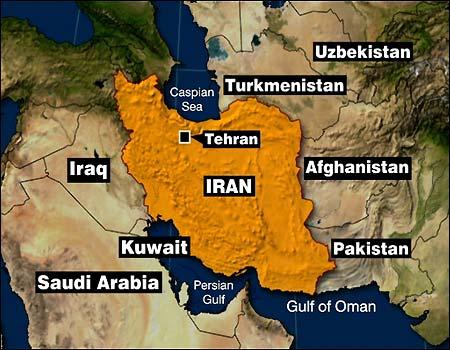
For many Iran observers, Washington’s latest accusations against Iran — implicating members of Iran’s Revolutionary Guard in an alleged plot to assassinate the Saudi ambassador to the United States — come off as surreal, if not wholly bizarre.
At this juncture, it may be too early to pass a credible judgment on the substance and validity of the allegations, but there are just too many reasons to dismiss them as another cynical attempt to further isolate Iran. In the greater scheme of things, such accusations might be part of America’s strategy to push its “regime change” agenda in Iran. Although only a trial in an impartial, credible, and civilian court could shed light on the truthfulness of the U.S. claims, we have every reason to take Washington’s allegations with a grain of salt.
Israeli Prime Minister Netanyahu may not be capable of understanding that the leaks about attacking Iran were intended to keep Israel safe rather than get back at him.

Many believe that attempts to control population growth are a conspiracy by the “global elite” to keep the world’s population to a controllable minimum.