Invading Libya is about the oil, Syria — eliminating the only Russian naval base in the Mediterranean and weakening Hizbollah.

Shifting Targets: From Iran to Libya and Syria (Part 1)
read more

Invading Libya is about the oil, Syria — eliminating the only Russian naval base in the Mediterranean and weakening Hizbollah.

On May 19, President Barack Obama said that “extraordinary change” is sweeping the Middle East. But the president’s silence about signs of counter-revolution in the Middle East is deeply disturbing. This silence comes not just from the White House but also from the Republican and Democratic leaderships in Congress, and the mass media. There is a particularly deafening silence about the arms deal negotiated with the Kingdom of Saudi Arabia last year.

The Obama administration appears to have given a green light to an Israeli attack on an unarmed flotilla carrying peace and human rights activists — including a vessel with 50 Americans on board — bound for the besieged Gaza Strip. At a press conference on June 24, Secretary of State Hillary Clinton criticized the flotilla organized by the Free Gaza Campaign by saying it would “provoke actions by entering into Israeli waters and creating a situation in which the Israelis have the right to defend themselves.”
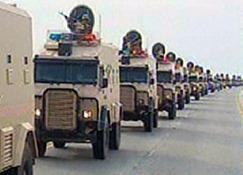
The Saudi and Bahraini monarchies recently announced the engagement of a Saudi princess to a Bahraini prince. A substantial bridal party has preceded her, though. Starting March 14th, 4,000 Gulf Cooperation Council (GCC) troops, mostly from Saudi Arabia, have entered Bahrain to suppress its protest movement. Some 1,600 Saudi soldiers will remain in the country indefinitely to safeguard the regime there from further “disturbances,” i.e., pro-democracy protests.

One Saturday afternoon while walking down Melrose Avenue in Los Angeles, I gave into the urge to stop people at random and ask them what came to their minds when I mentioned Iran. Here are some of their responses: Islamic government, human rights violations, a nuclear threat, sponsors of terrorism, Holocaust deniers, women in veils, anti-Semites, Khomeini’s fatwa on Salman Rushdie, enemies of Israel and the West, and the 1979 hostage crisis. Only one person had anything positive to say, and it had something to do with a great kebab dish he had had at a Persian restaurant on Westwood Boulevard.
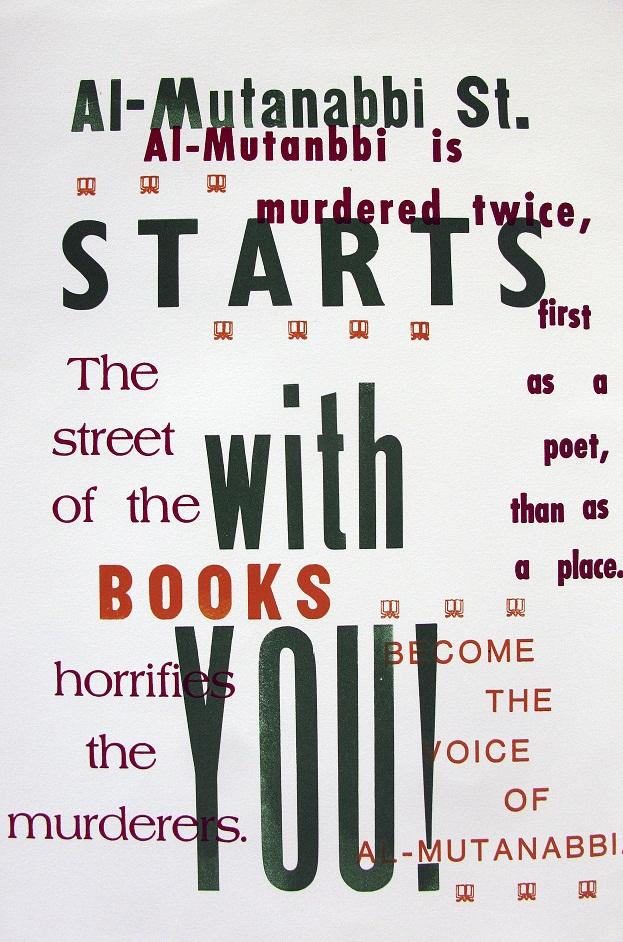
Named for a tenth-century poet and revolutionary who lived in what is now Iraq, Al-Mutanabbi Street in Baghdad was the center of the city’s intellectual and literary life. It was home to booksellers, stationery stores, antiquarian bookstores, and cafes as famous for the ideas that flowed freely as for their pungent coffee.
“Every time civilians are killed, you almost always do more harm than good,” agreed Carnegie’s Boucek. “You turn off the Yemeni people from wanting to co-operate; you turn off the government, because it looks like they’re facilitating it. It breeds further radicalization and makes it appear that Americans only care about terrorism, which is a pretty small issue compared to the challenges that Yemen faces and that lead to state failure or collapse,” he added.
Is Supreme Leader Khameini’s assertion of his will over President Ahmadinejad the step back that it seems for Iran?
Some in India see the U.S. attack on the Bin Laden compound as a chance to address their inferiority complex about their country being “soft.”

The new Egypt is looking to normalize relations with countries like Iran, re-evaluate ties with Israel, and tilt more toward the Palestinian cause. Given its profound cultural capital, powerful military, huge population, and strong economic fundamentals, Egypt could not only regain its regional influence but also play a more assertive and prominent international role. More importantly, the emergence of a democratic system in Egypt could transform the country into a model for the Arab world.