North Korea
The Limits of Information in North Korea

The Limits of Information in North Korea

If North Koreans simply knew more about the world outside – or received more accurate information about their own society – they would transform their country. This is an operating assumption behind much of the policy thinking in Washington and Seoul. Both governments pour money into radio stations that beam information into North Korea. Civil society activists, perhaps impatient with the incremental pace of government policy, try to get information into the notoriously isolated country by any means possible, from floating balloons over the border to crossing into the country to proselytize in person.

read more
Review: Escape from Camp 14

Review: Escape from Camp 14

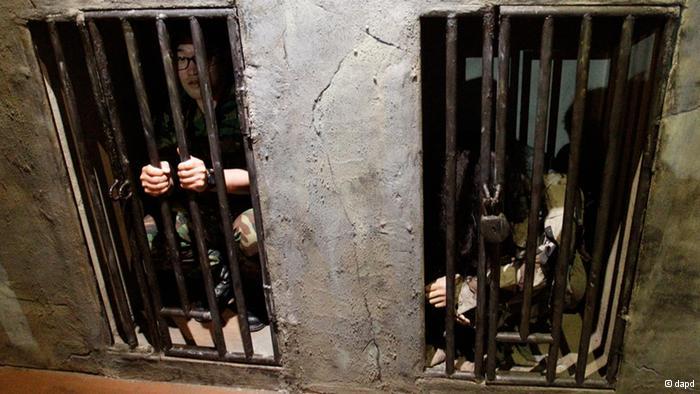
In North Korea’s Camp 14, where Shin Dong-hyuk was born, the first of the Ten Commandments that formed the rules of the camp states: “Anyone caught escaping will be shot immediately.” Everyone in the camp is obliged to witness these executions, for they serve as warnings to anyone who contemplates escape. Shin saw his first execution at the age of four.

read more
Spying on the North

Spying on the North

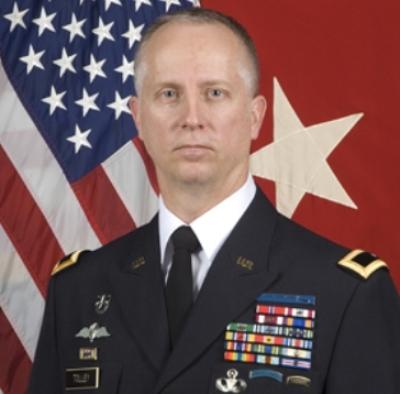
It started out as a routine briefing at a conference in Florida on U.S. special operations. One of the panelists, Army Brigadier General Neil Tolley, was talking about the importance of human intelligence in North Korea. A reporter, David Axe, dutifully wrote down Tolley’s comments and published his article in late May in The Diplomat, a foreign policy publication based in Tokyo. The article, quoting Tolley, claimed that U.S. Special Forces were already gathering human intelligence in North Korea.

read more
Tall Tale about Special Forces in North Korea?

Tall Tale about Special Forces in North Korea?

A classified Pentagon document leaked to me in 1984 may shed some light on a U.S. general’s outlandish claim last week that U.S. Special Forces, along with their South Korean counterparts, have parachuted into North Korea in search of human intelligence on the country’s nuclear weapons programs. The revelation was made by Brigadier General Neil Tolley, the commander of U.S. Special Forces in Korea, at a “Special Operations Force Industry Conference” in Florida organized by defense contractors. His remarks were relayed by David Axe, a prominent military writer who has reported on Africa and the Middle East but has little experience in Korea.

read more
North Korea’s Failed Fireworks

North Korea’s Failed Fireworks

In early February, Iran launched its third successful commercial satellite in three years. The Barack Obama administration, the United Nations, and the news media barely acknowledged the accomplishment. North Korea, on the other hand, has created a furor each of the three times its satellites failed to reach orbit. 

read more

North Korea’s 100th–To Celebrate or To Surrender?

On 16 March 2012, North Korea announced that it would launch an earth observation satellite named Kwangmyongsong (Lodestar) 3, aboard an Unha carrier rocket sometime between the hours of 7 am and noon on a day between 12 and 16 April, to commemorate the 100thanniversary of the birth of its state founder, Kim Il Sung, and the attainment of “strong and prosperous” status by the country. The launch from a base in the north of the country close to the border with China would be pointed south, dropping off its first phase rocket into the Yellow Sea about 160 kms to the southwest of South Korea’s Byeonsan peninsula and the second into the ocean about 140 kilometres east of Luzon in the Philippines. Due notice of the impending launch was issued to the appropriate international maritime, aviation and telecommunication bodies (IMO, ICAO and ITU) and, to mark the occasion, North Korea announced that it would welcome scientific observers and journalists. The 15 April date, in the 100th year according to the calendar of North Korea, has long been declared a landmark in the history of the state, and the launch seems designed to be its climactic event.

read more

Kim Jong-il and the Normalization of Japan-North Korea Relations

When I heard the sudden news of the death of North Korea’s leader Kim Jong-il, I felt as if I had been struck by lightning. Since his miracle recovery from the 2008 stroke, he had been busy travelling in and outside North Korea. Both he and others around him would have been concerned about his health, and also prepared for this moment. His death must have been such a huge regret for Kim himself, who was single-mindedly focusing on keeping his public promise to open a ‘big gate’ for a ‘powerful and prosperous Korea’ by the 100th anniversary of the birth of his father, Kim Il-song in 2012. As one Japanese who has been hoping for normalization of Japan-North Korea relations for the last 10 years, I could not but grieve over the death of the leader of our neighbouring country, who, more than anyone else, hoped to realise this goal. The Japanese government and people have lost their best chance to achieve normalization. The last decade has now become a lost decade.

read more