Russia
Russian Threats, American Missiles, and Bulgaria’s Choice

Russian Threats, American Missiles, and Bulgaria’s Choice

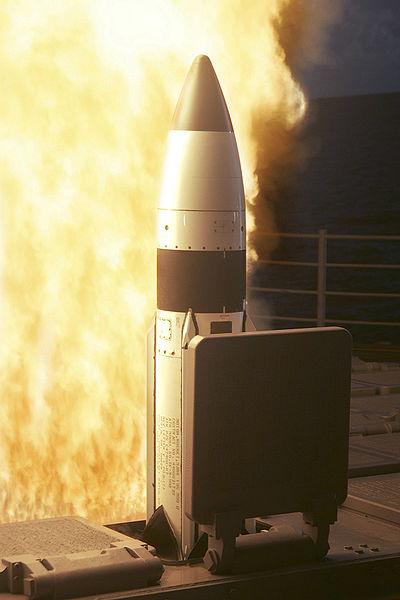
President Barack Obama decided to cancel the plans for missile defense based in the Czech Republic and Poland this past October. Washington has since worked on an alternative that Obama calls a “stronger, smarter and swifter defense” that “best responds to the threats we face.” The new system is built around sea-and-land-based SM-3 missile interceptors.

read more

Blood and Oil in Central Asia

In the past month, two seemingly unrelated events have turned Central Asia into a potential flashpoint: an aggressively expanding North Atlantic Treaty Organization (NATO) and a nascent strategic alliance between Russia and China.

read more

Lessons from Moscow and Tehran

Following three decades of mutually hostile postures characterized by minimal communication and limited and sporadic cooperation, the United States and Iran may be about to reengage more constructively.

Such a development, while important for us, would be of even greater significance for the greater Middle East and beyond. Its impact on a variety of relationships, including that between the United States and Israel, and those between Israel and its neighbors, would be transformative and positive. But much must happen by way of careful and persistent diplomacy to get the various moving parts in place. As Washington proceeds to restructure what is probably the key relationship in the region — namely, that between itself and Iran — it would do well to consider how another country has approached its own relations with Iran, in good times and bad. That country is Russia.

read more

Obama and Medvedev on Nukes

Committing the United States and Russia "to achieving a nuclear free world," Presidents Obama and Medvedev issued a joint statement breathtaking in its positive tone. It marks an astonishing shift from the hostile policies of the Bush and Clinton administrations and offers new hope to a world weary of the endless nuclear arms race. Their statement concludes:

read more

Pacific Freeze: Call to Action

With multiple crises affecting our world – global economy, climate change, resource depletion – we must urgently redirect the hundreds of billions of dollars spent on preparing for war. The United States, Russia, China, Japan, South Korea, and North Korea spent about $970 billion in 2008 on the military. That figure, alarmingly, is on the rise. For about one-tenth of this near-trillion dollar amount – about $90 billion a year – we can achieve more genuine security by eliminating global starvation and malnutrition, educating every child on earth, making clean water and sanitation accessible for all, and reversing the global spread of AIDS and malaria.

read more

Georgia, Iraq, and Athenian Justice

“Justice only enters where there is equal power to enforce it … [W]e have a right to rule … the powerful exact what they can, and the weak grant what they must.” While the Bush administration may disagree, this ancient Athenian quote applies equally to the Russian invasion of Georgia on August 8, 2008 and Bush’s invasion of Iraq in 2003. This statement was originally addressed to the leaders and residents of the small Greek island of Melos 2,439 years ago. The Athenians invaded Melos to prevent the possibility of future hostile actions. The Athenians killed all men of military age (about 600 of them) and enslaved the rest. While some may disdain such a brutal approach, others will recognize that this philosophy is the same as the United States under Bush’s, and now Russia’s, approach to modern foreign policy. Over the course of history, states with great power do what they want. If moral reasoning happens to support their action they will use it, but it is not necessary. As seen in Iraq and now in Georgia, states can easily manufacture reasons for military action. This is not new. One of the most infamous uses of Hitler’s intellectuals justified heinous crimes against humanity by publishing thousands of books and articles demonizing Jews and others that they considered to be the children of lesser gods. Reading from the Athenian playbook, the Russians demonized the Georgians by declaring the Georgians to be the aggressors, claiming that they were committing genocide against ethnic Russians. It did not help that the bombastic, reckless leader of Georgia was first to invade the separatist South Ossetians. The two disputed regions — South Ossetia and Abkhazia — were semi-autonomous regions with Russian “peacekeepers” stationed in them. Instead of using diplomatic persuasion and the United Nations to resolve the issues of these semi-autonomous regions in Georgia, the Russians invaded Georgia instead. A few short weeks later the President of Russia, Dmitry Medvedev, announced that Russia was recognizing South Ossetia and Abkhazia’s independence. Seeking their own brand of Athenian justice, the Russians wanted to teach a lesson to the Georgians and send a powerful message to other former Soviet Union countries such as Ukraine. The Russians put on display that their military can exact what they want and the weak Georgians (and other outlying regions) will grant what they must. But the Russians didn’t have to look back to ancient times to learn how to invade another country. In 2003, the United States set a powerful example in demonizing the Iraqi government and many of its people. Bush and his advisers thought they could take Iraq because it was weak and it served their political interests: an important strategic location, oil,  and a foothold to fight for our allies in the region. Demonizing Saddam Hussein was not hard to do. His earlier invasion of Kuwait mirrored that of Georgia’s military incursion. Like the United States, Russia ignored diplomacy and the UN when it made the rush to war. In both Georgia and Iraq, a sovereign nation was invaded contrary to all international laws with very little support from other nations. But invasions usually do not turn out the way the invaders desire. Russia should remember the lessons from its invasion of Afghanistan. And certainly, the disaster of post-invasion Iraq should serve as a warning to what can easily happen after a “successful” attack. Instead of recognizing that the U.S. war and occupation of Iraq served as a model for Russia, U.S. Secretary of State Condoleezza Rice recently denounced Russian’s invasion of Georgia. Rice said, “This is not 1968 and the invasion of Czechoslovakia, where Russia can threaten its neighbors, occupy a capital, overthrow a government, and get away with it.” Our hypocritical policies have never been so starkly evident. The Georgian crisis may only be the first to emulate Bush’s invasion of Iraq in the post-Cold War era. Hopefully our next president will demonstrate that the policies and words of George Bush and Condoleezza Rice are an American aberration, and not an example. The world cannot afford to live by Athenian “justice” anymore.

read more

Russia’s Anti-Democratic Paradox

With one hundred days in office and a war with Georgia under his belt, Dmitry Medvedev still has Western politicians confused. Who is really in charge – he or his mentor, Vladimir Putin? Is Medvedev really a liberal? But then why the “disproportionate” attack on Georgia?

read more

The Candidates and Russia

As expected, Russia’s First Deputy Prime Minister Dmitry Medvedev was elected this week as the new president of the Russian Federation with 70% of the vote. These elections were little more than a democratic charade. The Kremlin manipulated the media, the party system, and the courts to ensure a stable transition within the country’s political elite.

read more