It takes an irrational actor to know one.

Newt Gingrich and the “Madman” Theory of International Relations
read more

It takes an irrational actor to know one.

The Pentagon’s refusal to acknowledge that Agent Orange was stored on Okinawa endangers the health of both local Okinawans and American service members currently stationed on the island.

U.S. support for an authoritarian regime is by no means a new phenomenon nor is it peculiar to the Middle East.
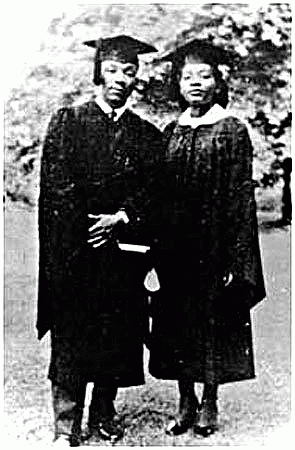
Did Defense Department general counsel Jeh C. Johnson really think invoking Martin Luther King, Jr.’s name in the service of our presence in Afghanistan would fly?

Van Pao’s “secret army” was financed by the CIA as part of the war against North Vietnam. Is the U.S. also tolerating and empowering drug lords in Afghanistan?
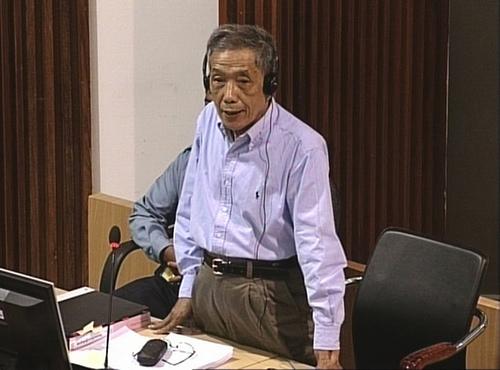
The Khmer Rouge Tribunal delivered its first verdict in July against Kaing Guek Euv, alias “Duch,” the director of the notorious S-21 prison, a torture and extermination center under the rule of Cambodian dictator Pol Pot. After a 77-day trial, the five judges — two international and three Cambodian — unanimously convicted Duch of committing crimes against humanity. He was sentenced to 35 years in prison.
In last month’s blitzkrieg tour of Central and Southeast Asia, two of the four stops Secretary Clinton made share the unfortunate bond of enduring an invasion by U.S. air and ground forces. In the space of a few days, Clinton visited both Vietnam and Afghanistan, thus physically linking what had once been, and then what has now become the United States’ longest war. One of the more insidious links that tie these conflicts together was highlighted in a few of the news stories about Clinton’s trip. That link, in a word, is agribusiness.

Dayl S. Wise was drafted into the US Army in 1969 and served in Vietnam and Cambodia in 1970 with the First Air Cavalry Division. After six months in country, he was wounded while on a reconnaissance team. Upon his discharge he studied engineering and worked as a draftsperson and design engineer for many years. Wise is a member of Vietnam Veterans Against the War and Veterans for Peace, and recently returned to school to become a teacher. He has self-published two collections of poems by veterans,The Best of Post Traumatic Press 2000 and Post Traumatic Press 2007.
The elderly gentleman had a remarkable history. He’d worked in the State Department in Latin America and Afghanistan. And, 60 years ago, he served as a translator in Tokyo in connection with the war crimes trial that resulted in 25 guilty verdicts and seven executions of Japanese war criminals just after World War II. Given his background, I was surprised at his viewpoint.
