The neoconservatives and liberal interventionists were discredited long ago, but the United States still has an obligation to help solve the Syrian crisis.
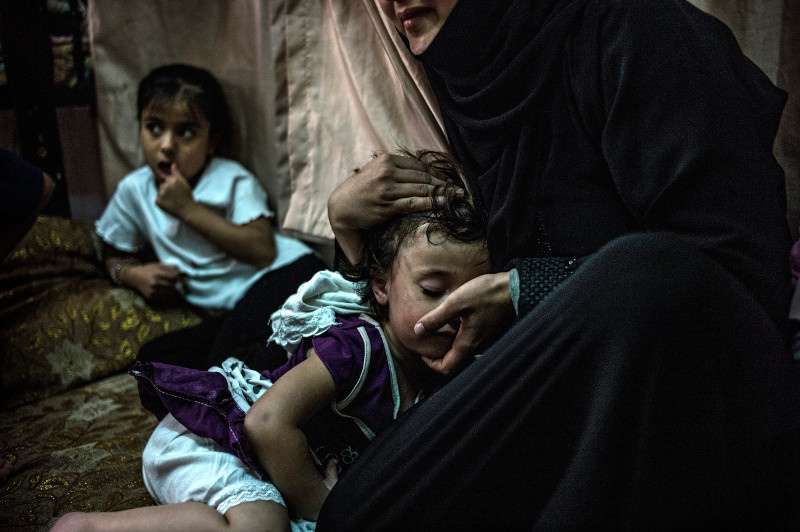
The Scandal of Syria
read more

The neoconservatives and liberal interventionists were discredited long ago, but the United States still has an obligation to help solve the Syrian crisis.

In Iraq, the U.S. broke a nation of human beings, and it owes them an apology–and restitution.
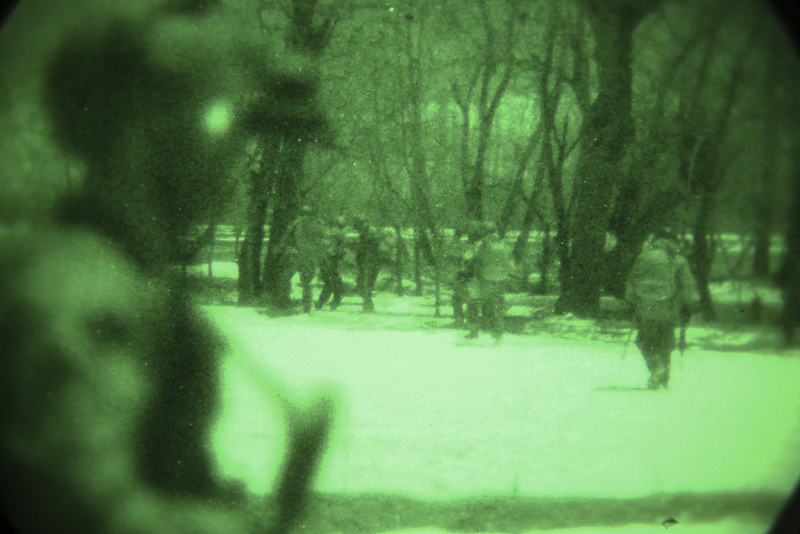
This September marked a potential turning point in America’s long and seemingly bottomless appetite for war. The Obama administration made a pitch for U.S. military intervention against Syria, and the American public didn’t buy it. Across the country, people...

As Syria’s civil war enters its third year, the country’s humanitarian crisis worsens each day and the Levant grows increasingly vulnerable to the conflict’s spillover. Unless a tactical shift in the balance of power occurs, it is unlikely that either the regime or the rebels will gain control of Syria’s entire territory, leaving open the possibility that the state will fragment along sectarian lines.

US troops left behind a devastated, tortured Iraq. Our real obligation, to the people of Iraq and the region and the rest of the world, is to transform our government and our country so that these resource-driven wars, shaped by lies and fought for power and for empire, whether in Iran or somewhere else, can never be waged again.
For all the dissimilarities, botched analogies, and tortured comparisons, there has been one connecting thread between the wars in Vietnam, Iraq, and Afghanistan that, in recent years at least, Americans have seldom found of the slightest interest: misery for local nationals. Civilian suffering is, in fact, the defining characteristic of modern war in general, even if only rarely discussed in the halls of power or the mainstream media.

While Malala Yousafzai bravery deserved the attention it received, it lies in stark contrast to the many other innocent victims of political violence in Pakistan. Indeed, the Drone War continues with hardly a mention in the U.S. media. It is not hard to imagine that if Malala lived in a different village, she could just as well have been killed by a Predator drone as by the Taliban—and we’d know nothing about her courage.

When the guerrillas were around, I fought for what was mine. When the paras came, I fought for what was mine. A guerilla commander once said to me, “Brother, you have to pick sides.” And I said, “No, I choose no side.” I was neither a para nor a guerrilla.

If the United States reaches a point where there is nothing to distinguish our military institutions from our civilian, then all of us are fair game.
There are moments that define a war. Just such a one occurred on June 21, when Special Envoy Richard Holbrooke and U.S. Ambassador to Afghanistan Karl Eikenberry helicoptered into Marjah for a photo op with the locals. It was to be a capstone event, the fruit of a four-month counterinsurgency offensive by Marines, North Atlantic Treaty Organization (NATO) allies, and the newly minted Afghan National Army (ANA) to drive the Taliban out of the area and bring in good government.