climate change

60 Second Expert: Cancun Talks

Following the failure of world leaders to arrive at any binding agreements during the last climate talks at Copenhagen, there appears to be little hope for meaningful action at the November/December climate change talks in Cancun, Mexico. In place of climate change skepticism, debunked by overwhelming scientific evidence, leaders are now relying on market-based mechanisms and technological fixes to further drag their feet and avoid confronting the economic model responsible for the crisis.

read more
Worlds Collide at Cancun Climate Talks

Worlds Collide at Cancun Climate Talks

The debate over climate change generally transpires within the cloistered confines of expensive hotels, executive boardrooms, and diplomatic halls. As seen in the failure to arrive at binding agreements in Copenhagen, the talks are generally as sterile as the surroundings.

read more
Military vs. Climate Security: The 2011 Budgets Compared

Military vs. Climate Security: The 2011 Budgets Compared

The gap between federal spending on military as opposed to climate security has narrowed since 2008. Compared to China, though, our progress is meager.

Though its military spending is not wholly transparent, it is estimated that China spends one-sixth as much as the United States does on military security, and twice as much on climate security.

read more
Latin America: Climate Change Swing States

Latin America: Climate Change Swing States

U.S. Special Envoy for Climate Change Todd Stern traveled with Assistant Secretary of State for Western Hemisphere Affairs Arturo Valenzuela to Chile, Peru, and Ecuador last week, to discuss climate change with his government counterparts and civil society. Deepening bilateral and multilateral cooperation to increase economic growth, cutting greenhouse gasses, and helping climate-vulnerable populations were on the official program.

read more

Bolivia Climate Conference: Indigenous Peoples Design Roadmap to New World

President Morales called the alternative climate summit following the failed United Nations Climate Change conference in Copenhagen, COP15, in 2009. Morales, in his opening address in Bolivia, urged individual lifestyle changes, with flagrant consumerism relying on disposable
 products and plastics to be replaced with new standards of living in harmony with the earth. Venezuelan President Hugo Chavez was among the dignitaries and participants from 150 countries. Although originally 5,000 to 10,000 people were expected, ultimately there were 30,000 at the gathering held April 20–22 in Cochabama, Bolivia.

read more

Will America Buy a New Climate Policy?

Without much fanfare, U.S. legislators last December unveiled a new climate bill that just might succeed in breaking the political gridlock that has blocked action on global climate change. The bill, co-sponsored by Senator Maria Cantwell (D-WA) and Susan Collins (R-ME), is a sharp departure from the cap-and-trade bill that passed the House of Representatives last June but subsequently died in the Senate.

read more

Tax Day and America’s Wars

Matt Ryan, the mayor of Binghamton, New York, is sick and tired of watching people in local communities “squabble over crumbs,” as he puts it, while so much local money pours into the Pentagon’s coffers and into America’s wars. He’s so sick and tired of it, in fact, that, urged on by local residents, he’s decided to do something about it. He’s planning to be the first mayor in the United States to decorate the façade of City Hall with a large, digital “cost of war” counter, funded entirely by private contributions.

read more
Why is Obama Drilling?

Why is Obama Drilling?

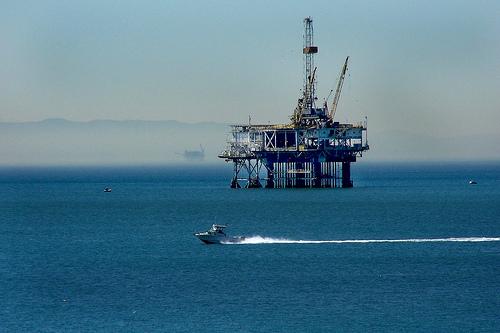
Once upon a time, “There’s Only So Much Oil in the Ground” was a popular song that could be heard on the radio. The year was 1974, and Tower of Power, an Oakland-based soul and funk band, was enjoying some commercial success. They made the year’s top 100 with “What is Hip?” In addition to the important topics of being young, hip, and falling in and out of love, they sang about the energy crisis. Following a brief OPEC oil embargo, the price of crude oil (in today’s dollars) jumped from $23 per barrel in 1973 to $41 in 1974. Everyone was thinking about the world’s finite and diminishing supplies of oil. As the song continued, “Sooner or later there won’t be much around.”

read more