Many of the same people who led the push for regime-change in Baghdad now have their sights set on Tehran.
WikiLeaks: To Maintain Illusion of Independence From U.S., Canada Downplayed Role in Iraq Invasion
Canada offered to “discreetly” assist the United States as it prepared to invade Iraq even as the ruling Liberal party trumpeted its foreign policy independence from Washington.
Iranq: One Size Foreign Policy Fits All
As with Iraq beating the drums of war on Iran only requires alleging imminent acquisition of WMD.
From Baghdad’s Own Tahrir Square to Mosul: The Friday of the Free
“Iraqis have broken the chains. But the world is silent and apparently deaf and blind. Where is the free Western press?”
Iraq’s Starving Artists
The exhibition, “Artists in Exile: Forgotten Iraqi Refugees in Syria,” seeks to bridge cultural gaps between the United States and Arab and Middle Eastern countries.
Will Libya Become a Second Iraq?
However different the two, Libya could still end up like Iraq today: a nation deeply divided not by sect and language but by geography and tribe.
Review: Cutting the Fuse
Foreign occupation is the common thread tying suicide terrorism together the world over. In Dying to Win and again in Cutting the Fuse, Robert Pape argues that the United States must endeavor to draw down its occupation of Middle Eastern countries and return to a policy of offshore balancing to maintain its regional interests.
Gun Crazy
The Pentagon and the National Rifle Association have a lot in common these days. They’re in love with guns. They maintain powerful lobbies. They refuse to acknowledge the dangerous consequences of their policies.
And they’re both on the defensive.
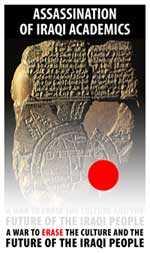
Who Assassinated Iraqi Academics?
By April 2004, just a little over a year after the U.S. invasion of Iraq and before the sectarian violence began, the Iraqi Association of University Teachers (AUT) reported that 250 academics had been killed. Award-winning British journalist Robert Fisk had warned early that year of the assassinations of Iraqi academics, but few U.S. newspapers picked up on the story. By the end of 2006, according to The Independent, over 470 academics had been killed. Another British paper, The Guardian, reported that about 500 academics were killed just from the Universities of Baghdad and Basra alone.
Review: It Is What It Is
For three weeks in 2009, Jeremy Deller and a handful of collaborators hauled a burned-up hunk of steel across the United States. This rusted carcass – a car destroyed in a Baghdad marketplace bombing in 2007 – transformed a vast swath of Middle America into a space for discussion about a war in which Washington long ago lost interest. It Is What It Is showcases transcripts of the group’s discussions, photographs from the obscure or eccentric locales where they occurred, and any number of other mementos from the group’s travels.