Part 2 of an interview with Drug War Mexico co-author Peter Watt.

In Mexico, No Matter Which Party Holds the Reins, the People Lose
read more

Part 2 of an interview with Drug War Mexico co-author Peter Watt.

The Mexican government’s heavily militarized fight against narcotraffickers has helped keep the country mired in violence and inequality.

On October 13, 2012, Mexican teenager José Antonio was hit by a hail of bullets coming from the U.S. side of the metal fence that lacerates the border city of Nogales. Some seven shots penetrated the boy’s body through the back and the head. He died instantly. The culprit? The U.S. border patrol.

On December 1, Enrique Peña Nieto of the Institutional Revolutionary Party (PRI) assumed the Mexican presidency amid a flurry of protests against the party, whose previous 70-year rule defined the country’s authoritarian past. Yet it’s difficult to imagine that the new president’s term could be worse than the unmitigated disaster of his predecessor’s, which was marked by a dramatic militarization of Mexico’s drug war, widespread human rights abuses, and tens of thousands of deaths.
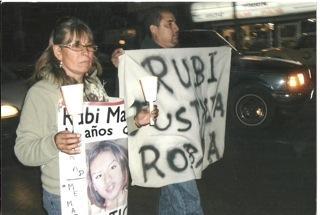
While a significant chunk of USAID spending goes to education and health programs, pockets of aid enlarge the already bloated military budgets of recipient governments. The result: less security and more violence against women, particularly women human rights defenders.

Javier Sicilia, a poet who lost his son to drug war violence in March of 2011, catalyzed the Caravan for Peace — a coalition of victims and Mexican citizens fed up with the bloodshed that has claimed more than 60,000 lives and left tens of thousands more disappeared since former President Felipe Calderon launched the drug war five years ago.

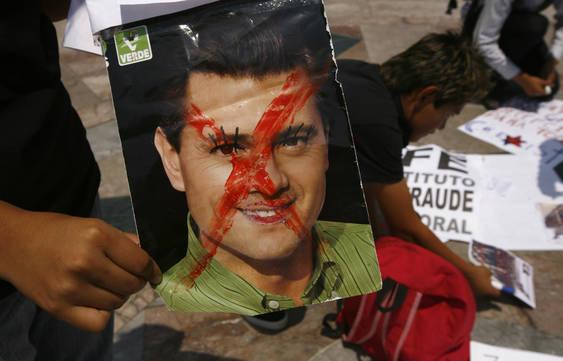
Weeks after Mexico’s presidential elections, thousands of people have turned out to protest the declared winner, Enrique Peña Nieto, and the imminent return to power of the party that ruled Mexico for more than seven decades. The Institutional Revolutionary Party, or PRI, which is slated to take office December 1, now faces increasing accusations of fraud, a legal demand to declare the elections invalid, and a youth movement that refuses to go away.
Drug traffickers in Mexico also do a brisk business in guns.
In December 2010, at the end of a study abroad semester in Puebla, some students and I organized a student expression project. Hundreds of students wrote complaints or ideas for their university, state, or country. Despite discouraging looks, I posted these note cards in a busy pathway at my public university the week that the campus was celebrating the centennial of the Mexican revolution.

Andres Manuel Lopez Obrador (AMLO), the candidate of the Party of the Democratic Revolution (PRD), lost Mexico’s presidency by only .56 of a percentage point in 2006. Fraud was widely suspected. Until recently, the media had anointed Enrique Pena Nieto, the candidate of the Institutional Revolutionary Party (PRI), as the certain winner in the July 1 election.
In the past month a student movement has arisen that has cast doubt on this electoral outcome.