Exciting news for the Islamic world, but may make Islamist extremists feel all the more justified in promulgating their unreconstructed brand of Islam.

Islamic Manuscript Radiocarbon Dated to Time of Muhammad
read more

Exciting news for the Islamic world, but may make Islamist extremists feel all the more justified in promulgating their unreconstructed brand of Islam.
Army hard-liners in Burma are resisting President Thein Sein’s opening to the West.
Security officials stood by during the attacks without intervening.

In his new book, Feeling Betrayed: The Roots of Muslim Anger at America, political psychologist and public opinion expert Steven Kull suggests that the reservoir of Muslim discontent with U.S. foreign policy remains as deep as it ever was. He argues that al-Qaeda, like any terrorist group, is able to operate in part because it can draw on a culture of support from within its broader community. Although they may have sharp qualms about al-Qaeda’s methods and its extreme form of Islam, many Muslims in Muslim-majority countries are drawn to defend the group’s resistance to the United States.
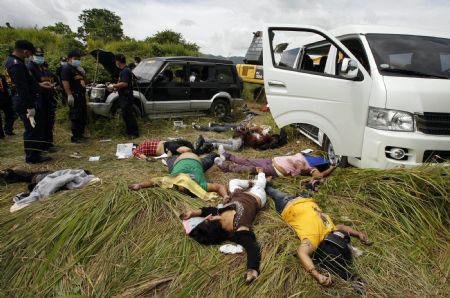
Outside the old municipal hall of Datu Piang, in the conflict-torn province of Maguindanao in southern Philippines, Lieutenant Colonel Benedict Arevalo stood on the riverbank and pointed to the marshland and hills. There, he said, was the Muslim rebels’ stronghold. In late October, the monsoon rains had swollen the river, cutting off Datu Piang’s bridge from the road on the other side. A marshy field with a lone hut, banana shrubs, and a derelict mosque lay directly across from where Arevalo stood briefing journalists on developments on the Philippine Army’s battle with the Moro Islamic Liberation Front. “This is lawlessness,” he said.

U.S. policymakers should learn from the events in the Middle East that the Muslim impulse for modernity and freedom is hindered, not helped, by Western military intervention. And they should learn soon. The U.S. “Af-Pak” war is accelerating the self-destruction of the world’s second largest, and only nuclear, Muslim country.
The Western world finally sees real Muslims in action.
Dear FPIF:
Thank you for your proposal for a new TV show about “a warm-hearted, middle-class Egyptian family named the Qosbis.” It’s an intriguing idea. Of course, we were thrilled by Katie Couric’s suggestion of addressing Islamophobia by creating a Muslim version of The Cosby Show. I believe, however, that she had in mind a Muslim-Americanshow, not a drama about an Egyptian family.
A nation is like a marriage, or so Lenin imagined it to be, with each partner or province having a right to get out if things go horribly wrong. The Soviet constitution of 1918 provided this right to each of the republics. It wasn’t an innovation that many other countries followed. And yet, constitutional provisions or not, the S word – secession – has occasionally brought nations to the brink of dissolution.
It has been said before that Al-Qaeda’s greatest victory was not September 11th but Abu Ghraib. Indeed, the images of Americans reveling in the humiliation of Arab prisoners enhanced the potency of al-Qaeda’s narrative and won it scores of new recruits. But to achieve this propaganda victory, the terrorist organization first had to accomplish something more basic: provoking a vigorous hatred of Arabs and of Islam among Americans.