Jihadists once flowed from Syria to Iraq. Now the favor is being returned.
Flow of Jihadists From Syria to Iraq Reversed
read more

Jihadists once flowed from Syria to Iraq. Now the favor is being returned.

On Saturday, Russia and China vetoed an otherwise unanimous UN Security Council resolution condemning the ongoing repression in Syria and calling for a halt to violence on all sides, unfettered access for Arab League monitors, and “a Syrian-led political transition to a democratic, plural political system, in which citizens are equal regardless of their affiliations or ethnicities or beliefs.”
Although the joint Russian and Chinese veto of the resolution is inexcusable, the self-righteous reaction by U.S. officials betrays hypocrisy on a grand scale and fails to take into account a series of policy blunders that have contributed to the tragic impasse.
He is, in the words of Barbara Walters, a “mild-mannered ophthalmologist.” Indeed, the rather squeamish leader-to-be chose eye surgery because it didn’t involve much blood. He speaks fluent English and can get by in French as well as his native Arabic. His wife is a knock-out, a “rose in the desert” according to a Vogue profile. Reluctant to take over the family business from his father, he interrupted his medical training in London to return home only after his older brother died in a car accident. Then, once at the helm, he released a number of political prisoners and instituted economic reforms that got a thumbs-up from the international business community. He cooperated with the United States in the immediate aftermath of 9/11. Even today, he uses all the right words: transparency, dignity, reform.
If the Islamic Revolution still means anything, Tehran betrays it by supporting Syria’s Assad regime.

Syrian President Bashar al-Assad’s regime must step down immediately—without Western military intervention. Certainly, the Syrian people deserve support to protect them from the brutal and barbaric onslaught of the Syrian’s security forces. But such assistance and safe haven should come from Arab countries and Turkey. Help from other Arab or Muslim countries would be less offensive to the Syrian people, would be less likely to entail an occupation force, and would likely be less long-lasting than an intervention by Western countries.
Some Syrians would welcome Western intervention
Not only are Turkey and Syria on the outs, but Iran is threatening Turkey.
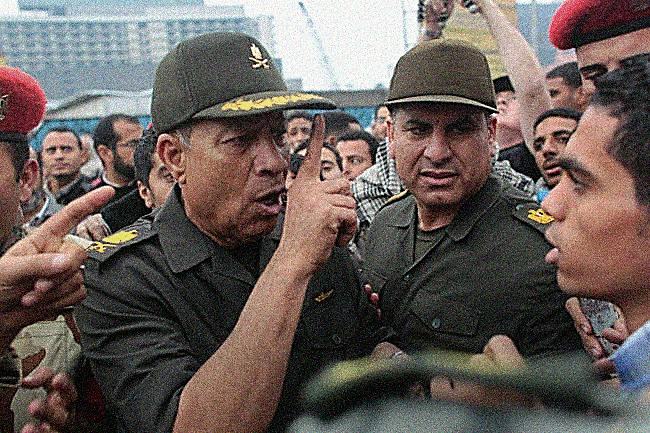
The U.S. does not wish to be seen as responsible for “losing” Egypt to Islamists in the coming elections.

In early October, Senate Republicans reversed a yearlong policy of deflection and unanimously confirmed Robert Ford as the U.S. ambassador to Syria. Though Ford has served in the post since his recess appointment by President Obama in early 2010, Republicans had balked at the idea of “rewarding” the Syrian government with the presence of an official U.S. ambassador, a position that had previously remained unfilled since the assassination of Lebanese Prime Minister Rafik Al-Haririin 2005. Since the Syrian uprising began earlier this year, Ford has been a persistent and vocal supporter of the opposition, and has issued a number of scathing indictments against the regime of Bashar Al-Assad.

When Syrian President Assad’s father, Hafez, came to power, he marginalized his own people, the Alawites.