Turkey
Resolving Muslim-Western Disputes

Resolving Muslim-Western Disputes

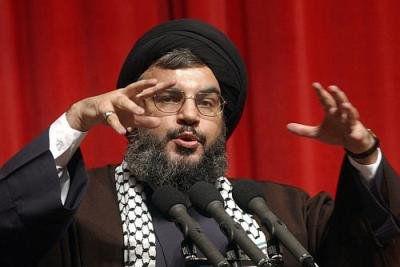
Western countries are embroiled in armed conflicts with Muslims, Arab nations, and non-state Arab and Muslim groups. To manage or resolve these ongoing disputes, Western disputants — including Israelis, who define themselves as Western — should become familiar with the ways Muslims and Arabs customarily manage and resolve disputes. Failure to understand these cultural differences will prolong or exacerbate ongoing conflicts.
read more
Arab Spring, Israeli Isolation

Arab Spring, Israeli Isolation

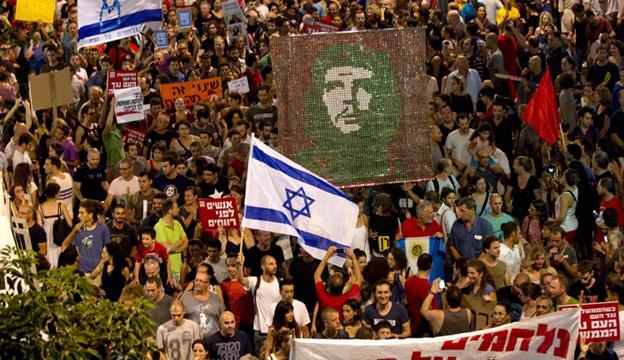
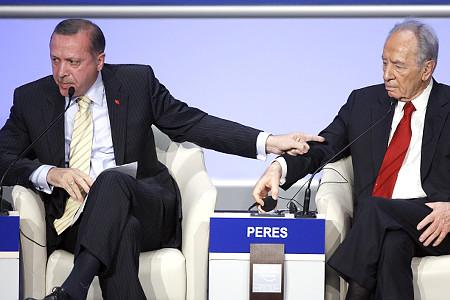
With the Arab uprisings gradually reconfiguring the regional political landscape, Israel is finding itself increasingly isolated. For at least a decade, Israel has identified Iran as its main strategic nemesis, but the Arab spring has rekindled simmering tensions between Israel on one hand, and Arab states as well as Turkey on the other.

read more

Dale Carnegie of the Middle East

U.S. democracy promotion efforts in the Middle East have been based on a bizarre notion: that U.S. society can serve as a model for the region. Talk about a tough sell. Congress is a bruising rugby scrum, and the U.S. economy is a shambles. U.S. warplanes and drones target Muslims abroad, and Islamophobia permeates the political discourse at home. Washington has supported Arab dictators and stood by Israel through thick and thin. We’re telling the world about the benefits of fruits and vegetables and then turning around to sell what looks like wormy apples and rotten tomatoes. No wonder that U.S. public diplomacy has largely fallen flat in the Middle East.

read more
Arab Spring, Turkish Harvest

Arab Spring, Turkish Harvest

After consolidating its domestic political position with an impressive third straight victory in the 2011 parliamentary elections, the Justice and Development Party (AKP) is poised to cement Turkey’s status as the prime indigenous power in the Middle East. As mass protests rock most of the region, including Israel, Turkey is increasingly holding itself up as an example of economic dynamism and democratic stability.

read more
The Sisyphus of Europe?

The Sisyphus of Europe?

In Greek mythology, King Sisyphus was sentenced to eternal senseless labor as a punishment for insulting the gods. Until the end of time, he must push an enormous stone up the hill only to have it roll back over and over again. Turkey was granted candidate status in December 1999 — 50 years after it first applied for membership — but has managed 12 years later to close only one chapter of the accession negotiations. Despite uphill movement by Ankara, the stone keeps rolling back down again to block Turkey’s entrance to the EU.

read more
Winners and Losers in a New Middle East

Winners and Losers in a New Middle East

The Middle East faces a moment of truth as country after country rises up against its authoritarian leaders. No government is secure against the people-powered protest movements sweeping the region. These dramatic events will likely be the greatest U.S. foreign policy challenge over the next decade. The regional security framework — with new roles for Egypt, Saudi Arabia, Turkey, Iran, Syria, Israel, and the likely Palestinian state (or states) — is evolving, and Washington must reexamine how it defends its regional interests in a new way.

read more
Arab Spring, Turkish Summer?

Arab Spring, Turkish Summer?

Political freedom, accountability, corruption, and economic justice are at the center of democratic protests. Turkey’s record on these issues has drawn the notice of many in the Islamic world. But Turkey’s experience with electoral politics and market economics is unique, a response to the specifics of Turkish history and culture. The example therefore may not be replicable.

read more
The Power of Political Islam

The Power of Political Islam

When western governments focus on political Islam, the debate gravitates toward the national security domain. Western governments and policy analysts routinely portray the role of Islam within Arab political life as a danger to western interests. In reality, Islam is an integral component of contemporary Muslim politics. With some innovative thinking, the United States and its western allies can use the power of Islam to their advantage as well as the advantage of people in the region.

read more