
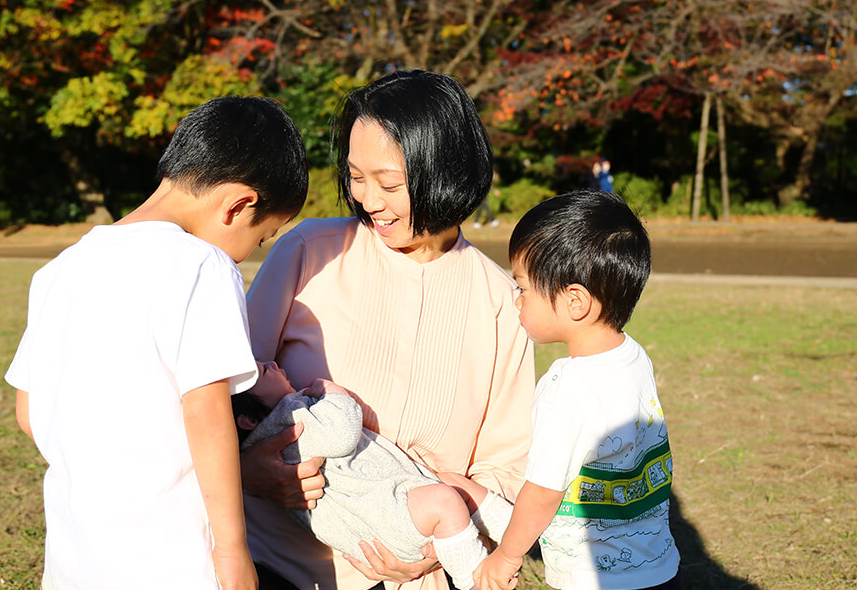
The debate over who will replace the recently retired founder of the Japanese progressive party Reiwa Shinsengumi Yamamoto Taro has brought a previously low-key citizen activist Ishii Reiko to the forefront in Japanese politics. Ishii Reiko, a woman who rose to prominence through hard work at the local level in Mitaka City (Metropolitan Tokyo) became one of the three finalists for head of Reiwa.
The other two candidates, Yamamoto Joji (who has served three terms in the House of Representatives and was a well-connected political journalist previously) and Sakaguchi Naoto (who has run repeatedly in various parties) are both products of elite Waseda University. They are considered possible successors to Yamamoto primarily on the basis of their prominence in the media.
Ishii, who is 20 years younger than them, has focused like a laser on concrete local issues. She rarely appears in the mainstream media. Unlike Yamamoto and Sakaguchi, she has no Wikipedia entry in Japanese or English, and she does not seek out attention.
Ishii delivers effective speeches in front of the Mitaka subway station, while keeping her three young children under control, at times with help from her husband. This skill is not valued much in Japanese politics, but for those who notice, it gives her substantial legitimacy.
A New Party Rises, Falls, and…Rises?
The progressive party Reiwa Shinsengumi came into being in April 2019 under the leadership of Yamamoto Taro. It set itself apart from the neo-liberal agenda of the Liberal Democratic Party (LDP) and Democratic Party, and also stood in contrast to the bureaucratic inflexibility of the Japanese Communist Party. Reiwa unambiguously denounced the consumption tax and condemned the health risks posed by the Fukushima nuclear power accident. It also forcefully opposed the militarization of Japan under the administration of Abe Shinzo, which used opaque administrative structures to tie the Japanese government to the American military.
Reiwa Shinsengumi offered a fresh approach to progressive politics, but it relied heavily on Yamamoto’s fame as an actor and his remarkable skill as a speaker. Community organizing and local political issues remained a weakness. Yamamoto was an articulate defender of the poor, a proponent for the peace constitution, and a prominent doubter about nuclear power, but the party’s fortunes depended on his personal charisma. He challenged the elites, but he came from the world of entertainment stars living comfortable lives. The reality is that he was not accessible at events and he was not up late at night at operational committee meetings.
The result was a disaster for progressives, and especially Reiwa, in last April’s election for House of Representatives. Its total seats went from nine to one.
Part of the problem was that Reiwa’s key issue, opposition to the consumption tax that unfairly burdened working people, was taken up by other parties, and even the Liberal Democratic Party started talking about eliminating the consumption tax for essential foods.
Moreover, Yamamoto unexpectedly resigned in January from the House of Councilors due to ill health, yet stayed on as party leader. The party, in the rush before the snap election, relied on Yamamoto’s reputation and his articulate speeches, but he was not capable of joining candidates on location. Reiwa was able to put forward only 18 candidates. Most districts did not even have a Reiwa candidate on the ballot.
Although the former military officer turned politician Isezaki Kenji remains a prominent Reiwa power in the House of Councilors because of his expertise in international relations, the party no longer is perceived as the brave opposition to the neo-liberal policies of the LDP. Instead, a new crop of populist conservative groups like Sanseito, Ishin, and the Japanese Conservative Party emerged to serve as opposition to the LDP, but from the right—a familiar trend in many countries around the world.
The marginalization of Reiwa and the Japanese Communist Party allowed for Japanese alignment with the Trump administration to a dangerous degree. The LDP has made plans for a radical revision of the constitution, perhaps by a popular vote, that would open the doors for a powerful military. The restrictions on exports of weapons were thrown off, and the Diet committed to a massive increase in military spending (13 percent in 2025). Talk about Japanese nuclear weapons moved from the margins to center stage.
The Ishii Approach
Ishii Reiko, if elected, would be a very different head of the party than Yamamoto. A soft-spoken and empathetic politician, she is known for how much time she takes to listen to citizens and to formulate concrete plans in committee to solve immediate problems for the community. She is there for people every day at her office.
Ishii fought to preserve the local astronomical observatory to give children a chance to learn about science. She led a group that demanded that the city inspect tap water for the presence of dangerous “forever chemicals” (PFAS) that were leaking out from the U.S. military base at Yokota. She was unique in speaking out repeatedly about the unapproved removal of trees as a result of pro-business development plans, stressing that trees belong to citizens and that tree canopies protect citizens from the hot sun and create a healthy ecosystem.
Because Ishii started her career assisting the elderly suffering from dementia at a nursing home, and then worked for a pharmaceutical company, she is deeply aware of the burden for working people of expensive and ineffective medical treatment.
Another unique political approach is her focus on children’s rights. Paradoxically, she is a politician who is most concerned with those who cannot vote. In many cases she tries to see the world not from the standpoint of parents concerned about their children, but from the eyes of children. Her own hardships as a child growing up in an unstable family led her to see things from the child’s perspective.
Ishii battled bureaucracy to help one elementary school student who was unable to attend school for five months due to bureaucratic mistakes. She went as far as to propose that students be allowed to record their conversations with teachers and education officials so that they would have evidence to support their positions in the case of disagreement. She repeatedly refers to article 12 of the UN Convention on the Rights of the Child to support her proposed reforms to protect children subject to abuse or neglect.
That includes speaking out about the dangers of relying on smart phones and tablets for small children, suggesting that these devices can be a form of abuse. She keeps her children away from processed foods and sweets, and fights to make sure that the food served at schools is nutritious. She made a point of insisting that the alternative school for dropouts also supplies nutritious meals.
Her fight to obtain a housing allowance for workers in Mitaka City Hall—so that they can afford to live in the neighborhood they serve despite the small salary they receive—is symbolic of her politics. She felt that people who worked in government should be part of the community. Such an issue has no appeal as a vote-getter in elections or as a fundraising ploy.
Above all, what sets Ishii apart from just about any politician in Japan is her focus on the Gaza genocide in Gaza. She is out there, her hair tinted with two narrow bands of pink, giving speeches for busy neighbors about what is being done to children in Palestine.
She explains:
I have experience working as a medical worker caring for the aged and I learned about the terrible sufferings our people experienced in the Second World War. Now, here we are facing the real possibility of war again. That sense of crisis drives my politics. We cannot allow a war to take place under any circumstances.
It was this political sincerity, even if not dramatic, that propelled Ishii Reiko to prominence precisely because she has gone against the common sense of Japanese politics.