I was on Wisconsin public radio last week, being interviewed on the state of U.S. foreign policy. All the callers were in perfect harmony. We all agreed that the last eight years have been a disaster for the United States, that we must move away from militarism and toward diplomacy, that we must, well, you get the drift. I commented to the host that the country would be in better shape if Wisconsin were in charge.
Now Class, Let’s Review Iraq’s Lessons
The American people have expressed themselves clearly on the Iraq War itself for quite a while now. By large majorities hovering around 70 percent, they want it to end. Fulfilling this expressed will of the people is our most urgent foreign policy priority, one that can’t be forgotten, ignored or deferred. But there is other, related, unfinished business to which we as a people need to attend. The worst foreign policy disaster in U. S. history may actually have an upside of sorts: that the war has served as a tryout for a number of policy innovations. “Thanks” to the war, we know enough now to cross them permanently off our list.
An Interview with Jonny 5 from the Flobots
The Flobots are unique both in message and style. Saif Rahman from Foreign Policy In Focus had the opportunity to talk to Jonny 5 from the Flobots about their background, views on foreign policy, the Democratic National Convention being held in their hometown, and their hopes for the movement and this country.
Obama’s Right Turn?
In many respects, presumptive Democratic presidential nominee Barack Obama has played right into the hands of cynics who have long doubted his promises to create a new and more progressive role for the United States in the world. The very morning after the last primaries, in which he finally received a sufficient number of pledged delegates to secure the Democratic presidential nomination and no longer needed to win over voters from the progressive base of his own party, Obama – in a Clinton-style effort at triangulation – gave a major policy speech before the national convention of the America-Israel Public Affairs Committee (AIPAC). Embracing policies which largely backed those of the more hawkish voices concerned with Middle Eastern affairs, he received a standing ovation for his efforts.
Lebanon Intrusion
On the eve of the 50th anniversary of the first U.S. military intervention in Lebanon, and 25 years after a second U.S. military intervention which left hundreds of Americans and thousands of Lebanese dead, the U.S. House of Representatives recently passed a resolution by a huge bipartisan majority which may lay the groundwork for a third one. At a minimum, this move has crudely and unnecessarily inserted the United States into Lebanon’s complex political infighting.
Free Trade Follies
Although Iraq is the defining foreign policy issue so far in the presidential race, China will no doubt be smuggled into the election through this rather stark contrast between the Republicans and Democrats over trade.
Richard Wright on Black Power
In 1954, acclaimed novelist and thinker Richard Wright published Black Power about his visit to the Gold Coast (later Ghana) and his observations concerning the rise of the Pan-African movement. On the 100th anniversary of Wright’s birth, the American University of Paris is holding a centennial conference on June 19-21. In the lead-up to this conference, FPIF’s E. Ethelbert Miller discusses the novelist’s views on Africa and colonialism with James Miller (English and American Studies, George Washington University), Michele L. Simms Burton (African American Studies, Howard University), and Jerry W. Ward (English, Dillard University).
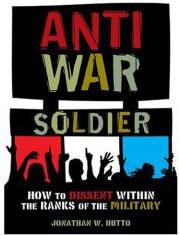
Anti-War Soldier: An Interview with Jonathan Hutto
Iraq Veterans Against the War, with their Winter Soldier hearings, have brought their stories to the public. Along with IVAW, the Appeal for Redress is organizing where no one else is–inside the military itself. What began on October 23, 2006 with 65 active-duty soldiers has now swelled to over 2,000. Documenting the history of this movement as well as telling his own personal story of how he became an “Anti-War Soldier” is one of the leaders of the movement, Jonathan Hutto.
Estonia’s Singing Revolution
Second Thoughts
As we approach the 2008 elections, let’s go big tent and put together a star-studded group to tour the swing states. Let’s also send these new Second Thoughters to college campuses in a political version of Scared Straight.