War & Peace
The Balkanization of Somalia

The Balkanization of Somalia

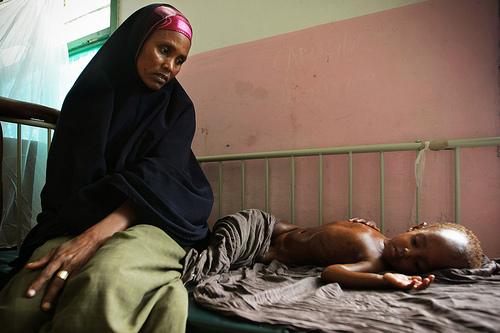
Political instability within Somalia and the actions of the international community are closely connected. By supporting regional actors inside Somalia, instead of supporting the federal government, the international community is contributing to the centrifugal forces that keep the country weak, violent, and in a prolonged humanitarian crisis.
read more

Expanding Network of Drone Bases To Hit Somalia, Yemen

Based in part on newly disclosed U.S. diplomatic cables recently posted by Wikileaks, the Washington Post reported that the U.S. military has been flying armed drones over both countries from a base in Djibouti and is planning to build a second base in Ethiopia. 

read more

The Occupation That Time Forgot

I’m reminded of how Chinese premier Zhou EnLai supposedly answered a question in 1972 about the significance of the French Revolution. “Too early to tell,” was his reputed reply; and though he may never have said it, how true it is that the major events of our world carom through history in ways that remain unpredictable even hundreds of years later.  How then to arrive at an assessment of the Arab Spring — and now far harsher Summer and Fall — of 2011, other than to say that it has proven monumental?

read more
Confronting Agent Orange

Confronting Agent Orange

Agent Orange, the notoriously toxic defoliant first used by U.S. troops during the Vietnam War, has long been known to cause liver cancer, birth defects, leukemia, and other illnesses in people exposed to it. Although the U.S. military hasn’t actively used the chemical since the 1970s, a number of forgotten victims are still suffering the nightmare of its contamination.

read more
Stabilizing Congo

Stabilizing Congo

Despite the efforts of the United Nations’ largest active peacekeeping force, several peace agreements among the belligerents, and a temporary six-month ban on mining earlier this year, conflict in the eastern Democratic Republic of the Congo (DRC) persists after nearly 15 years. It has been—and continues to be—a destructive conflict. More than 5.4 million perished in the region between 1998 and 2003, and an estimated 45,000 continue to die monthly due to malnutrition, disease, and violence. 

read more
Arab Spring, Turkish Harvest

Arab Spring, Turkish Harvest

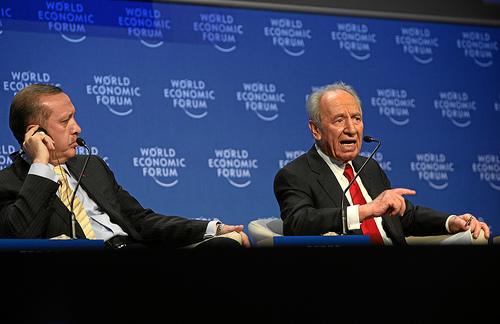
After consolidating its domestic political position with an impressive third straight victory in the 2011 parliamentary elections, the Justice and Development Party (AKP) is poised to cement Turkey’s status as the prime indigenous power in the Middle East. As mass protests rock most of the region, including Israel, Turkey is increasingly holding itself up as an example of economic dynamism and democratic stability.

read more
Why Al-Qaeda Won

Why Al-Qaeda Won

With the tenth anniversary of the crime that was 9/11, the question inevitably crops up: who won, the United States or al-Qaeda? According to the politically correct answer, although al-Qaeda has been decimated, it has been a Pyrrhic victory for Washington. In defeating al-Qaeda, the U.S. government engaged in many unnecessary violations of human rights and due process that diminished America in the eyes of both its citizens and the world.

read more
Karachi’s Long Summer of Violence

Karachi’s Long Summer of Violence

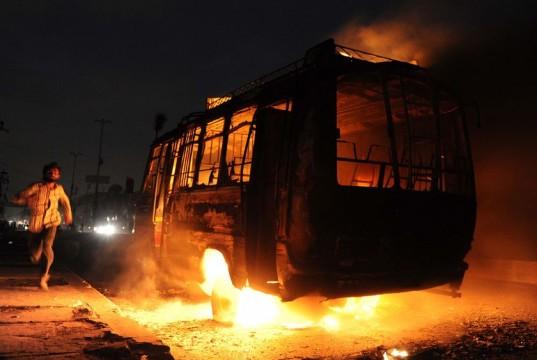
Karachi is the biggest city in Pakistan. It is the country’s commercial hub, financial capital, naval base, and only operational seaport. For the past several months, this city has once again been in the grip of violence. Gunshots ringing out in poor neighborhoods claimed the lives of more than 400 individuals in the months of July and August. 

read more