Europe & Central Asia
Reorienting U.S. Security Strategy in South Asia

Reorienting U.S. Security Strategy in South Asia

Positive movement in the India-Pakistan relationship would go a long way to stabilizing the region. Although transnational terrorism remains a serious concern, it does not carry the same existential threat as does the risk of a regional nuclear war. Reducing Indian-Pakistani tensions will alleviate the need for Pakistan to continue its support for terrorist proxies and bring their national security interests more in line with those of the United States. Movement on this underlying issue will have a positive impact on many other regional concerns and help bring to an end the chronic instability that has plagued the region for the past 50 years. 

read more
Europe Taking Lead on Speculations Tax

Europe Taking Lead on Speculations Tax

Out of the ashes of the 2008 financial crisis, an idea that progressives have been kicking around for decades – a financial transactions tax (FTT) – took on new life. There were high hopes that the G-20, which had declared itself the “premier forum for international economic coordination,” would take up the proposal as a way to raise massive revenues to pay for the costs of the crisis and also discourage reckless short-term financial speculation. 

read more
Greece on the Verge

Greece on the Verge

On June 29, the Greek parliament ignored the huge protests in Syntagma Square and approved the austerity program. But the Greek movement that has emerged to challenge this unpopular loan package is not going away.

read more
Pipeline Politics in Central Asia

Pipeline Politics in Central Asia

From the end of the 19th century to the mid-1990s, Central Asia was almost the exclusive domain of Tsarist, Soviet, and post-Soviet Russia. A “Great Game” involving Tsarist Russia and the British Empire dominated the region’s history in the mid-19th century and what is now South Asia. The growing multi-polarity in global politics and a scramble to secure access to depleting natural resources, especially oil and gas, have led to the emergence of a “New Great Game’ that has the potential to fix the future structure of the global political and economic system. The battle over the construction of new pipelines and the routes they will take is at the heart of this “New Great Game,”which has been playing out in earnest since the mid-1990s.

read more
Afghanistan: Going through Withdrawal

Afghanistan: Going through Withdrawal

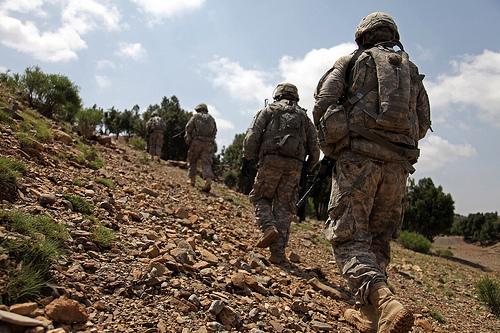
When Barack Obama ordered an additional 30,000 troops into Afghanistan in 2009, he further stipulated that a withdrawal begin in July 2011 and continue until completion by 2014. As promised, the first drawdown of the 100,000-strong force is scheduled to take place next month. This withdrawal comes at a peak of anti-war sentiment.

read more