Many foreign-policy analysts linked to the second Bush administration believe that the elevated and energized partnership with India he and his advisors brought about may be his greatest and most enduring legacy. The significant effort they put in to revitalizing the relationship undoubtedly deserves to be acknowledged for what it is, an important redefinition – but that failed to create the political, institutional framework necessary to sustain the considerable momentum generated by the civil nuclear cooperation deal. Moreover, the redefinition came about as a result of a “de-hyphenated policy,” that is to say a, delinking of India & Pakistan in U.S. foreign policy (i.e., building relations with India and relations with Pakistan rather than an India-Pakistan approach).
Coverups in Afghanistan
The conflict in Afghanistan, which will enter its 10th year this fall, shows no signs of abating. The United States has expended substantial blood and treasure to try and stabilize the country. However, recent events suggest that U.S. efforts are problematic in themselves and that the chaos will only worsen. There are critical problems with accountability, transparency, and public scrutiny, all of which not only make it harder for the United States and NATO to shift away from unproductive policies. These also create serious domestic political issues in Afghanistan.
Obama’s “Remainees” Will Not One But Two Guantanamos Define the American Future?
On his first day in office, President Barack Obama promised that he would close the Bush-era prison at Guantanamo Bay, Cuba, “as soon as practicable” and “no later than one year from the date of this order.” The announcement was met with relief, even joy, by those, like me, who had opposed the very existence of Guantanamo on the grounds that it represented a legal black hole where the distinction between guilt and innocence had been obliterated, respect for the rule of law was mocked, and the rights of prisoners were dismissed out of hand. We should have known better.
By now, it’s painfully obvious that the rejoicing, like the president’s can-do optimism, was wildly premature. To the dismay of many, that year milestone passed, barely noticed, months ago. As yet there is no sign that the notorious eight-year-old detention facility is close to a shut down. Worse yet, there is evidence that, when it finally is closed, it will be replaced by two Guantanamos — one in Illinois and the other in Afghanistan. With that, this president will have committed himself in a new way to the previous president’s “long war” and the illegal principles on which it floundered, especially the idea of “preventive detention.”
Russian Threats, American Missiles, and Bulgaria’s Choice
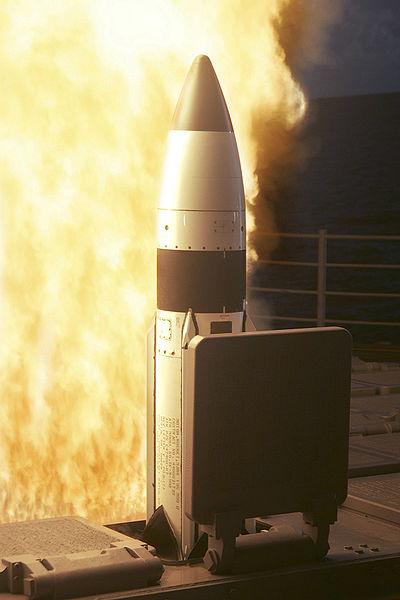
President Barack Obama decided to cancel the plans for missile defense based in the Czech Republic and Poland this past October. Washington has since worked on an alternative that Obama calls a “stronger, smarter and swifter defense” that “best responds to the threats we face.” The new system is built around sea-and-land-based SM-3 missile interceptors.
Review: ‘Bridging Partition’
Over one million people would die before the partition of India and Pakistan was over in 1947, when one country suddenly became two. The governments in Delhi and Islamabad quickly set about recasting national identities that would strengthen each individual regime. Central to these newly formed identities was a strong loathing for the other side, developed through closed borders, years of warfare, and a systematic approach by both governments to create fear. The people, once united, became enemies.
Afghanistan: Should We Stay or Should We Go?
Almost nine years after the United States invaded Afghanistan, public support for a continued military presence has wavered and many politicians have called for an exit strategy. However, some observers believe a withdrawal of U.S./NATO troops would create a dangerous vacuum in the region. For those who opposed the invasion from the start, there is further debate: Can the “Out Now” position the antiwar movement has advocated for Iraq also be valid for Afghanistan? Or should activists voice a more nuanced stance that addresses, in particular, the prospective plight of Afghan women under Taliban rule?
The Really Really Long War
Let’s imagine that the Cold War was a detour. The entire 20th century, in fact, was a detour. Since conflicts among the 20th-century ideologies (liberalism, communism, fascism) cost humanity so dearly, it’s hard to conceive of World War II and the clashes that followed as sideshows. And yet many people have begun to do just that. They view the period we find ourselves in right now — the so-called post-Cold War era — as a return to a much earlier time and a much earlier confrontation. The wars in Afghanistan and Iraq aren’t discrete battles against a tyrant (Saddam Hussein) or a tyrannical group (the Taliban). They fit together with Turkey’s resurgence, the swell of Muslim immigration to Europe, and Israel’s settlement policy to form part of a much larger struggle.
Europe’s Islamophobia
When the Swiss voted last year to prohibit future construction of minarets on their soil, political commentators in neighboring European countries were quick to express their moral outrage. “The vote of shame,” headlined Liberation in France. Belgium’s Le Soir deemed targeting the towers in order to aim at the population below them to be “hypocritical and fallacious.” The London Times predicted “international embarrassment” for Switzerland.
Behind the Afghan Fraud
All frauds have a purpose, mostly to relieve the unwary of their wealth, though occasionally to launch some foreign adventure. The 1965 Tonkin Gulf hoax that escalated the Vietnam War comes to mind.
Premature Withdrawal
We’ve now been at war with, or in, Iraq for almost 20 years, and intermittently at war in Afghanistan for 30 years. Think of it as nearly half a century of experience, all bad. And what is it that Washington seems to have concluded? In Afghanistan, where one disaster after another has occurred, that we Americans can finally do more of the same, somewhat differently calibrated, and so much better. In Iraq, where we had, it seemed, decided that enough was enough and we should simply depart, the calls from a familiar crew for us to stay are growing louder by the week.