Leon Panetta has expressed a concern that Iran’s Revolutionary Guard Corps has expanded into Latin America.
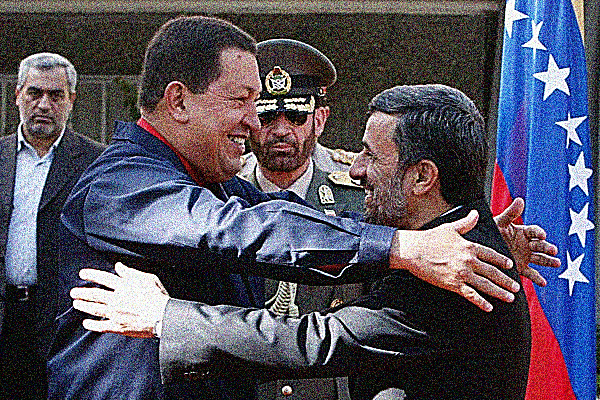
Administration Buys Lies About Iran Using Latin America as Base for Terrorism
read more

Leon Panetta has expressed a concern that Iran’s Revolutionary Guard Corps has expanded into Latin America.
Hanging from City Hall in the center of downtown Bogota is an enormous banner that reads: “To arm or to love?” [Armar or amar], advertising an initiative being carried out by the new administration of democratic leftist mayor Gustavo Petro Urrego. The initiative bans legal firearms from public places in an effort to reduce the number of homicides. The measure is also intended to strengthen the ability of the police to dismantle criminal bands and decommission illegal firearms and other weapons.
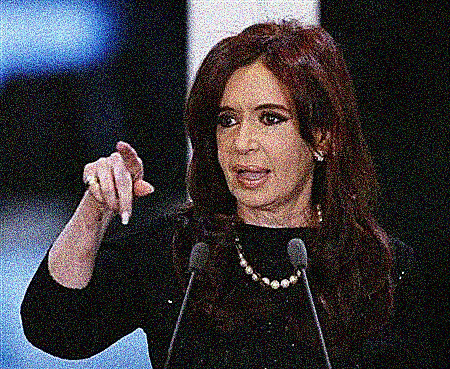
The Financial Times’s characterization of Argentina’s president as shrill and shabby is a case of a kettle trying to find a pot to call black.
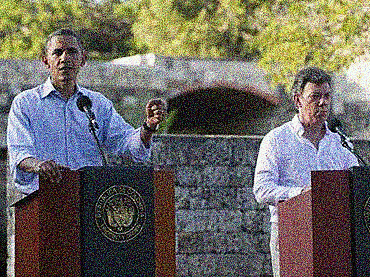
The legacy of the Cartagena summit, however, will likely be the beginning of a serious regional debate on international drug control policies.
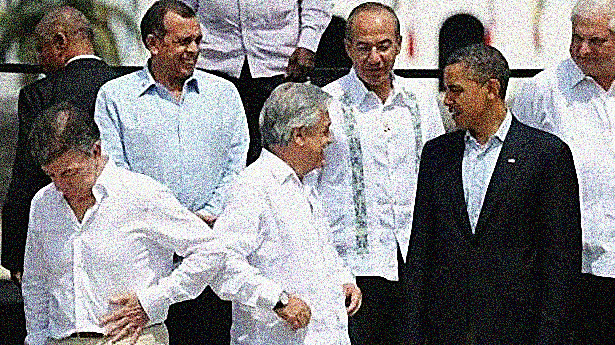
Cuban leader Raoul Castro had expressed a desire to attend the meeting but was delicately told by the host, Colombian President Santos, it that would be impossible because of President Obama’s presence.
Others were concerned that Brazil would derive the bulk of the benefits from the road at the expense of Bolivia.

The war on drugs is America’s forgotten war.
In an election year, presidential candidates spend a great deal of time bowing before the altar of the creaky Cuban embargo
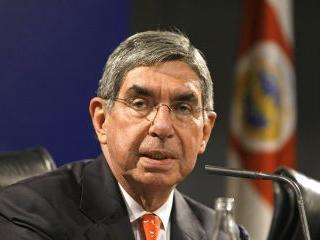
When I was a child, Costa Rica endured a war of its own, though it did not receive any attention in the pages housed in this building. When the war ended in 1948, Costa Rica made a voluntary decision that no other country had ever undertaken: to abolish its army and declare peace to the world. By doing this, my country promised me, and all its children, that we would never see tanks or troops in our streets. My country promised me, and all its children, that it would invest, not in the weapons of our past, but in the tools of our future; not in barracks, but in schools, hospitals, and national parks; not in soldiers, but in teachers, doctors, and park guards. My country promised to dismantle the institutions of violence, and invest in the progress that makes violence unnecessary. Quite simply, my country invested in its people.
For the first time, there’s been a concerted — and effective — effort to intervene in the nominating process and prevent a crony coronation.