The Saudis and the Turks are scaling up their support for Syrian jihadists while the Israelis contemplate a new war with Hezbollah.
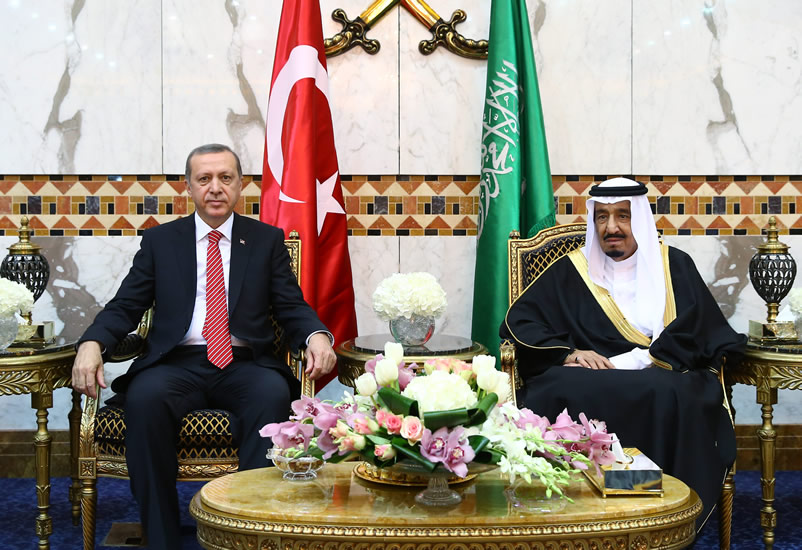
The Dark Saudi-Israeli Plot to Tip the Scales in Syria
read more

The Saudis and the Turks are scaling up their support for Syrian jihadists while the Israelis contemplate a new war with Hezbollah.

In the post-Cold War era, the right and even some on the left are playing a new game of “Who’s your favorite dictator?”

A Washington gathering of Persian Gulf autocrats sums up the absurdity of America’s relationship with some of the world’s most oppressive regimes.

Saudi Arabia’s ongoing war in Yemen does more to highlight the kingdom’s isolation than its power.

According to a poll, the same percentage of Arab citizens identify themselves as confirmed atheists as Americans.

Washington’s support for Yemen’s former dictatorship — and of Saudi efforts to sideline the country’s nonviolent pro-democracy movement — helped create the current crisis.

Unification of the Middle East, though not a caliphate, would be ideal, but unity would be a step in the right direction.

The Saudi-led coalition intervening in Yemen has more in common with 19th-century Europe than the 21st-century Middle East.

The Yemen war is a variation on an old theme, where despotic regimes in the Middle East call on the United States to do their dirty work.
The Saudi intervention in Yemen perpetuates the lawlessness of the so-called “War on Terror.”