What war between China and Japan could cost us.
The U.S. Would Face a Harsh Choice — and Economic Loss — in War Between China and Japan
read more

What war between China and Japan could cost us.
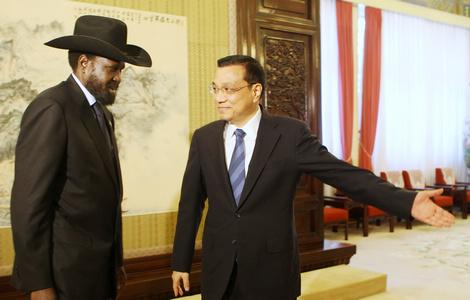
Sudan and China have enjoyed cordial relations for decades, developing a fruitful economic and political partnership dating back to their mutual estrangement from the West in the late 1980s and early 1990s. But Sudan’s 2011 partition has presented China with a new set of challenges. Namely, Beijing will be challenged to advance its interests in the Sudans while upholding its foreign policy principle of non-intervention in other states’ affairs.
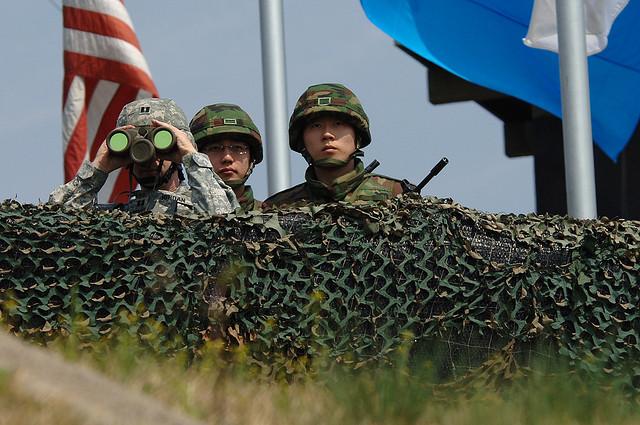
It’s time for the Obama administration to start withdrawing the American military from Korean soil. Not only would such a move save billions of dollars annually ($15 billion, according to a 2006 article by the Cato Institute’s Doug Bandow) at a time when the cost of maintaining America’s global garrison is coming under increasing scrutiny, but it would shift the impetus for negotiating solutions to the long-running dispute squarely onto the shoulders of the key players in the region.
It’s old, and likely thoroughly forgotten now, but last summer the Washington Post ran an excellent article on the U.S. military‘s “pivot” toward Asia, its origins, and its budget implications. It presented some meaningful background on where the pivot came from, and how it so quickly became dogma in Washington as the decade-long ground wars receded in the national rear-view mirror.

Washington has been reluctant to reevaluate “soft power” when it seems so obviously a fig leaf for the assertion of military dominance. But perhaps by looking at the palpable failures of Chinese efforts in Asia, U.S. policymakers could learn some lessons about strategy. Other countries in Asia that aspire to cultivate both hard power and soft power – Japan, South Korea – should also take note: you rarely can have it both ways.
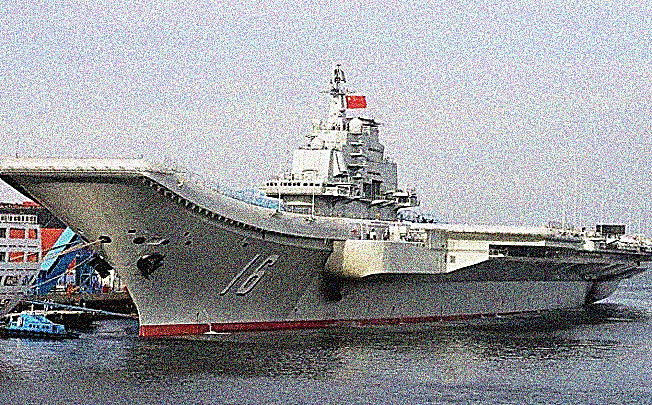
China understands that aircraft carriers are no longer flagship crafts.

Many African governments prefer China as an economic partner over Western countries for a number of reasons. First, China’s own development experience has instructive value. Second, China fulfills Africa’s need for critical infrastructure more cheaply, less bureaucratically, and more quickly. And finally, China portrays Africa more positively as a partner in “mutually beneficial cooperation” and “common prosperity,” rather than a “doomed continent” requiring aid.

If the only thing that Doha can do is to expose the futility of the old strategies and the urgent necessity of exploring of new negotiating positions that can lead to a breakthrough before it is too late, then this diplomatic charade masquerading as a serious climate negotiation will have fulfilled its function.

China’s once-in-a-decade leadership transition will have major implications for China’s neighbors in Southeast Asia. Given this, it might be worthwhile to review the changing understanding of the momentous developments in China on the part of people in our region, using my generation—the so-called “baby boomers”—as an example.

As many pundits have noted, if the rest of the world were voting in the U.S. presidential election, the third presidential debate would probably have proceeded differently. But since only about 200 million people on earth are eligible to vote for the man whose policies will impact all of us, the final stretch of the campaign has turned into a bipartisan exercise in imperial chest-thumping.