Military contractors have shelled out over $1 million to the 2016 presidential candidates — including over $200,000 to Hillary Clinton alone.

Big Money in Politics Doesn’t Just Drive Inequality. It Drives War.
read more

Military contractors have shelled out over $1 million to the 2016 presidential candidates — including over $200,000 to Hillary Clinton alone.

Why has waste at the Pentagon been so hard to rein in? Simple: The military-industrial complex profits from waste.
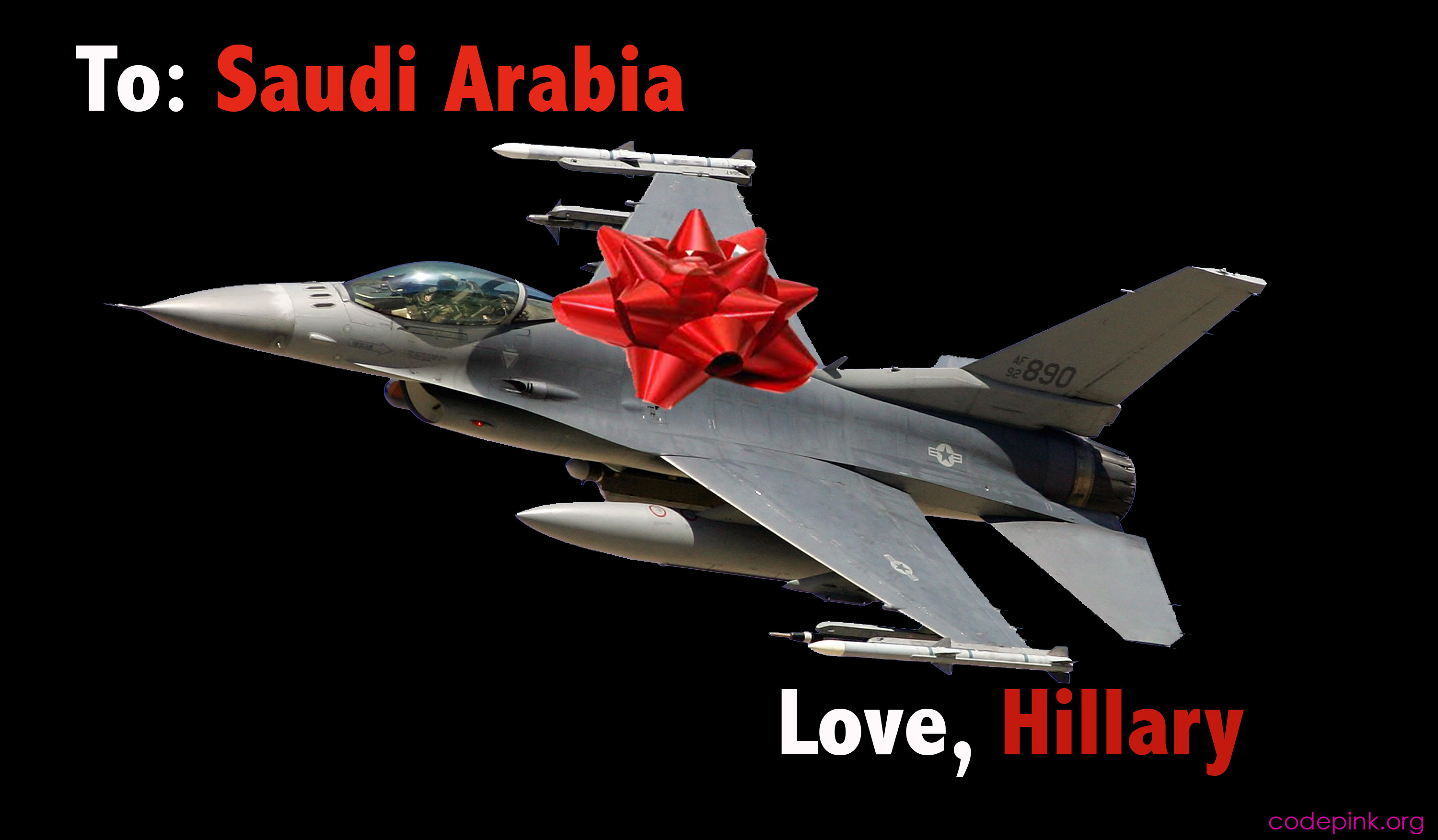
While Saudi Arabia and Boeing poured cash into the Clinton Foundation, Hillary Clinton’s State Department approved enormous sales of Boeing fighter jets to the kingdom.

Taking the diplomatic road on Iraq and Syria would let Sanders get back to the business he started in 2002 — making space between himself and Hillary Clinton on the Middle East.

Since World War II, the United States hasn’t let a day go by without a mortal enemy.

A trillion dollars. It's a lot of money. In a year it could send 127 million college students to school, provide health insurance for 206 million people, or pay the salaries of seven million schoolteachers and seven million police officers. A trillion dollars could do...

Our country’s existing jobs program goes by many names: The Permanent War Economy, Military Keynesianism, The Iron Triangle, Perpetual War. The real question it raises is not whether the government should spend. It is whether the government has been spending well.

William Hartung’s Prophets of War is a scathing indictment of Lockheed Martin’s business practices, relationship with members of Congress and the executive branch, and seeming indifference to the forces of capitalism. Hartung does not hesitate to hammer the defense-industry giant from cover to cover.
At this point, it can only be pulled out by its roots — or via a grass-roots movement.
When New York City wanted to make the biggest purchase of subway cars in U.S. history in the late 1990s, more than 3 billion dollars worth, the only companies that were able to bid on the contract were foreign. The same problem applies to high-speed rail today: only European or Japanese companies could build any of the proposed rail networks in the United States. The U.S. has also ceded the high ground to Europe and Japan in a broad range of other sustainable technologies. For instance, 11 companies produce 96% of medium to large wind turbines; only one, GE, is based in the United States, with a 16% share of the global market. The differences in market penetration come down to two factors: European and Japanese companies have become more competent producers for these markets, and their governments have helped them to develop both this competence and the markets themselves.