Russia

Can Beijing and Moscow Help with Tehran?

The real test of President Barack Obama’s dealing with China and Russia will be whether he can persuade them to support U.S. pressure on Iran to give up its nuclear weapons aspirations. Obama is reported to have lobbied China on that issue during his recent visit. He also broached the topic with Russia in the recent past for the same purpose, but with little success.  Iran denies wanting to join the nuclear club, but Washington has no faith in those denials.

read more
The AfPak Train Wreck

The AfPak Train Wreck

When President Barack Obama laid out his plan for winning the war in Afghanistan, behind him stood an army of ghosts: Greeks, Mongols, Buddhists, British, and Russians, all whom had almost the same illusions as the current resident of the Oval Office about Central Asia. The first four armies are dust. But there are Russian survivors of the 1979-89 war that ended up killing 15,000 Soviets and hundreds of thousands of Afghans as well as virtually wrecking Moscow’s economy.

read more

Lessons from Moscow and Tehran

Following three decades of mutually hostile postures characterized by minimal communication and limited and sporadic cooperation, the United States and Iran may be about to reengage more constructively.

Such a development, while important for us, would be of even greater significance for the greater Middle East and beyond. Its impact on a variety of relationships, including that between the United States and Israel, and those between Israel and its neighbors, would be transformative and positive. But much must happen by way of careful and persistent diplomacy to get the various moving parts in place. As Washington proceeds to restructure what is probably the key relationship in the region — namely, that between itself and Iran — it would do well to consider how another country has approached its own relations with Iran, in good times and bad. That country is Russia.

read more

What To Do Now in Georgia

There are no saints and even fewer geniuses in the conflict between Russia and Georgia over Ossetia. However, Russian Prime Minister Vladimir Putin, clearly the real power in Moscow, has certain proven himself even less saintly than other parties – and in the long term, less clever. Albeit with serious input from American miscalculations and atavistic politics and with the help of the hapless Georgian leader Mikheil Saakashvili, Putin has made both Russia, and the world, a more dangerous place.

read more

Big Three Block Iran Attack

The United States is in a huge foreign policy muddle in the Middle East. It wants to dominate and control Iran but requires the support of the world community to accomplish its aims. Diplomacy and sanctions require only a low level of support. On the other hand, to launch a military attack or green-light one by Israel, the United States needs far more backing.

read more
Christians United for Israel and Attacking Iran

Christians United for Israel and Attacking Iran

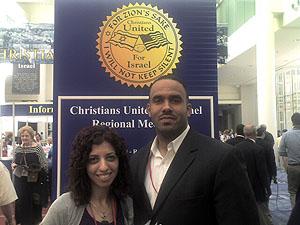
The “squeeze Iran” and “confront Iran” positions are strongly encouraged by the increasingly powerful Zionist Christian Fundamentalist community. About 5,000 people from across the United States attended the third annual Washington-Israel Summit, organized by Christians United for Israel (CUFI). There, the “Iranian threat” loomed as a pervasive theme.

read more

Russia’s Anti-Democratic Paradox

With one hundred days in office and a war with Georgia under his belt, Dmitry Medvedev still has Western politicians confused. Who is really in charge – he or his mentor, Vladimir Putin? Is Medvedev really a liberal? But then why the “disproportionate” attack on Georgia?

read more