United Nations

MDGs: How Far We’ve Come and What Still Has to be Done

Thanks to the UN Millennium Development Goals (MDGs), standards world leaders agreed on in 2000 to lift the poor, the sick and the hungry by 2015, professionally-attended births are at an all-time high in Africa. Benin is most improved, and even war-scarred DRC and Angola have risen to the challenge, with Angola halving maternal deaths.

read more

‘Smart Sanctions’ on Iran are Dumb

In the face of the rising hysteria regarding Iran’s development of its nuclear power facilities, there is talk of preemptive military strikes against Iran. Meanwhile, sanctions on Iran — by both the UN Security Council and the United States — have become increasingly harsh. And to the extent they are successful, these sanctions will harm the wrong people and have little impact on the political leadership.

read more
Waste at the UN?

Waste at the UN?

No matter the administration in Washington, it’s always a good time to attack the United Nations. The familiar trope is “waste, mismanagement, and corruption.” The Oil for Food investigation during the Bush years, for instance, generated immense amounts of smoke but in the end very little fire. Now we learn that U.S. auditors have “found that the Pentagon can’t account for more than 95 percent of $9.1 billion in Iraq reconstruction money.” The media that actually mentioned the story failed to acknowledge that the money was in fact the surplus from the UN Oil for Food Fund.

read more
A Break in Israeli-Turkish Relations?

A Break in Israeli-Turkish Relations?

UN Secretary General Ban Ki-moon recently announced that, after two months of negotiations, Israel has agreed to an international inquiry on the May 31 deadly flotilla assault. International pressure and Ban Ki-moon’s personal efforts played an important role in the Netanyahu government’s unprecedented decision. Israel’s concession meets one of the demands made by Turkey, which lost nine citizens in the assault and which has threatened to break off relations with what had once been a key military ally.

read more
Turkey, America, and Empire’s Twilight

Turkey, America, and Empire’s Twilight

When U.S. forces found themselves beset by a growing insurgency in Iraq following their lighting overthrow of Saddam Hussein, the most obvious parallel that came to mind was Vietnam: an occupying army, far from home, besieged by a shadowy foe. But Patrick Cockburn, the Independent’s (UK) ace Middle East reporter, suggested that the escalating chaos was more like the Boer War than the conflict in Southeast Asia.

read more
Lethal Force on the Border

Lethal Force on the Border

Sergio Hernandez Guereca’s short life revolved around the U.S.-Mexico border that ultimately led to his death. On June 7, at approximately 6:30 p.m., a U.S. Border Patrol agent shot the 15-year-old Hernandez in the face in Mexican territory between Ciudad Juárez, Chihuahua, and El Paso, Texas.

read more
Review: ‘The United Nations and Civil Society’

Review: ‘The United Nations and Civil Society’

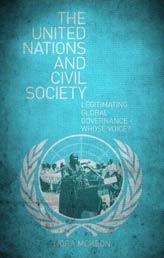
Institutions of global governance such as the United Nations are often limited to inter-governmental dialogue with little input from the civil society actors they directly affect. However, in her book The United Nations and Civil Society: Legitimating Global Governance – Whose Voice?, Nora McKeon documents the interaction between civil society organizations (CSO) and the United Nations over the last two decades. Developments between the two actors, she argues, point to meaningful civil society inclusion within the global political system.

read more

Review: ‘What’s That? A Human Hell’

U Win Tin is a close associate and advisor of Burmese democracy leader Aung San Suu Kyi and is also known as the chief strategist of the opposition party, the National League for Democracy (NLD). Over his lifetime, he spent 19 years in Rangoon’s Insein Prison, most of it in solitary confinement.

read more
Review: ‘Bridging Partition’

Review: ‘Bridging Partition’

Over one million people would die before the partition of India and Pakistan was over in 1947, when one country suddenly became two. The governments in Delhi and Islamabad quickly set about recasting national identities that would strengthen each individual regime. Central to these newly formed identities was a strong loathing for the other side, developed through closed borders, years of warfare, and a systematic approach by both governments to create fear. The people, once united, became enemies.

read more