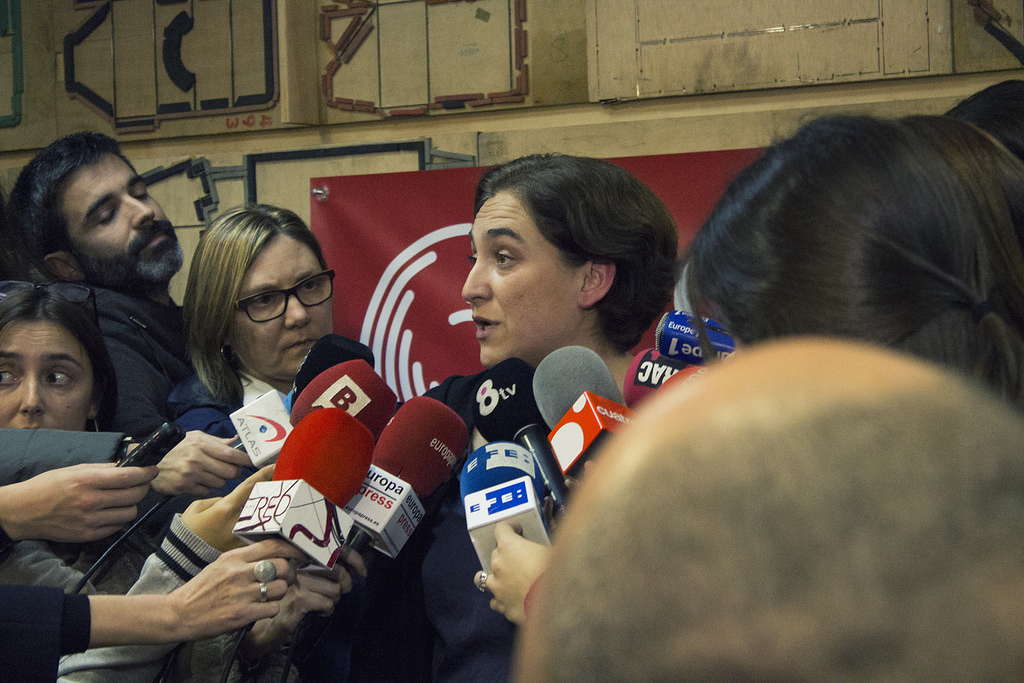
As national governments lurch to the right, a radical citizens coalition is Barcelona is showing how ordinary people can reclaim control of their communities.
How Progressive Cities Can Reshape the World — And Democracy
read more

As national governments lurch to the right, a radical citizens coalition is Barcelona is showing how ordinary people can reclaim control of their communities.
Radio Tahrir: a marathon retrospective on the Arab awakening, the Indignados and the Occupy movement.
Noam Chomsky has seen a lot of social movements. He cut his teeth on the civil rights and anti-war movements of the 1960s and 1970s. He participated in the anti-intervention struggles of the 1980s as well as in the World Social Forums that began in the 1990s. Now in his 80s, Chomsky has hardly slowed down with his schedule of writing and speaking and agitating. And he is certainly not one to watch the new Occupy movement from the sidelines.
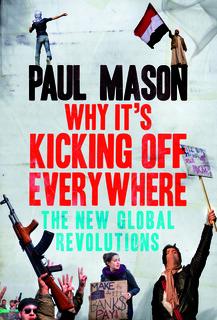
It was not sheer coincidence, journalist Paul Mason explains in Why It’s Kicking Off Everywhere: The New Global Revolutions, that drove people from places as varied as Egypt, Greece, Britain, New York City, and Wisconsin to stand up and speak out against injustice in 2011. Rather, a cascading international financial crisis brought the disconnect between governments and citizens into sharp relief, which ultimately resulted in a massive series of protests in all corners of the map.
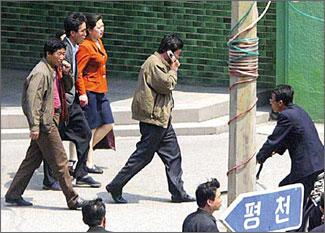
It’s not likely that an Occupy Pyongyang movement will set up tents in Kim Il Sung Square anytime soon. Protest, after all, is virtually non-existent in that society. But the same widening inequalities that plague the United States and the global economy can also be found inside North Korea. What was once a relatively equitable society, albeit at the low end of per-capita GDP, has been experiencing a rapid polarization in wealth. The implications of this widening gap on North Korean government policy–as well as on international policies promoting human security inside North Korea–are enormous.
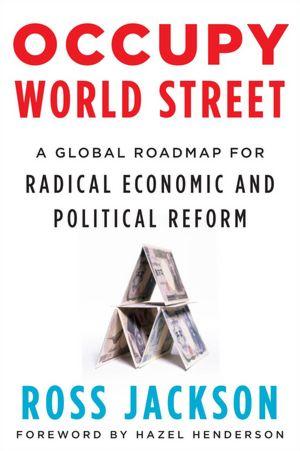
The current global financial system remains unstable, a house of cards awaiting the next disturbance. It might be the exhaustion of fossil fuels or the breakup of the euro or a major hedge fund collapse. Corporations have growing influence over the political system. And American CEOs are making over 300 times as much as the average worker.
Lenin graces the cover of a recent issue of The Economist. The Financial Times is running an entire series on the “crisis in capitalism.” Francis Fukuyama, a recovering neoconservative, makes a plea in Foreign Affairs for the left to get its intellectual act together. And that noted class warrior Newt Gingrich has been assailing Republican presidential candidate Mitt Romney for being a ruthless moneybags.
Excuse me? Does the left hand know what the right hand is doing? What parallel universe did we all just stumble into?
Virtually everything we read in novels and newspapers, not to mention the video games we play and the Hollywood movies we watch, reminds us that we’re steeped in violence and that it’s only going to get worse.
Everything, that is, except Steven Pinker.

The leading tagline of the Occupy Wall Street movement reads: “Protest for World Revolution.” This is an ambitious claim, to be sure. And in most respects it seems to ring quite true: the movement has successfully taken root not only in cities and towns throughout the United States but also in major urban centers around the world. On October 15, Occupy Wall Street’s success inspired a broad wave of coordinated occupations across Europe.
But the Occupy movement has been notably absent outside of North America and Europe.
When Foreign Affairs puts inequality on its cover – and hosts a debate on the topic at the tony offices of the Council on Foreign Relations – the Occupy Wall Street movement has achieved a major victory that eclipses even the generally favorable coverage in liberal bastions such as The New York Times, The New York Review of Books, and The New Yorker. It’s also a sign that a profound anxiety gnaws at the foreign policy elite in this country. The question is: why are foreign policy mandarins suddenly so fretful? Or, put another way, why does Foreign Affairs want its readers to take this issue so seriously?