Documents reporting how easy it is to illegally cross the Mexican/Guatemalan border reveal Mexican security conflicts but fail to address Guatemalan concerns.
Fireground Rules, Part 2: A Scheme is Not a Vision
As with wildfires, conflicts between states are the interplay of multiple factors which can generate manifestly different outcomes.
WikiLeaks XVI: Cancun — From a Combustible Regional Summit to a Lacklustre Climate Conference
Colombia’s ambassador to Mexico called the Cancun regional summit an “expression of Banana Republic discourse.”
Brazilian Foreign Policy Under Dilma: Interview with Igor Fuser
On Oct. 31, Brazilians elected their new president, Worker’s Party (PT) candidate, Dilma Rousseff. Over the last eight years, President Luiz Inácio “Lula” da Silva, has turned the world’s attention to Brazil like never before, as his country has increasingly participated on the international scene.
WikiLeaks: War, Diplomacy & Ban ki-Moon’s Toothbrush
These documents on their own will mean little but as instruments in the hands of rising U.S. and global movements against war, and for diplomacy just maybe these documents will help to end wars and change the world.
Review: The End of Arrogance
The continuing failures in Afghanistan and Iraq have seriously eroded public perception of U.S. military dominance. The U.S. economy has been transformed from the “engine of economic growth” into the source of the global financial meltdown. American failures to address key global issues such as poverty, disease, and global warming have tarnished our image as protectors of the weak; our inability to protect our own citizens from unexpected disasters has become an international embarrassment. By all accounts, America’s unipolar moment has passed.
Make 1325 Real for Women’s Peace and Security
October 31 marked the tenth anniversary of the momentous UN resolution on women, peace and security—UNSCR 1325. This set a new international standard that requires all parties—the UN, states, and armed militias—to ensure that women participate fully in peace negotiations and post-conflict reconstruction. If this really worked, it would transform our militarized world.
Canada on Ice: at the UN
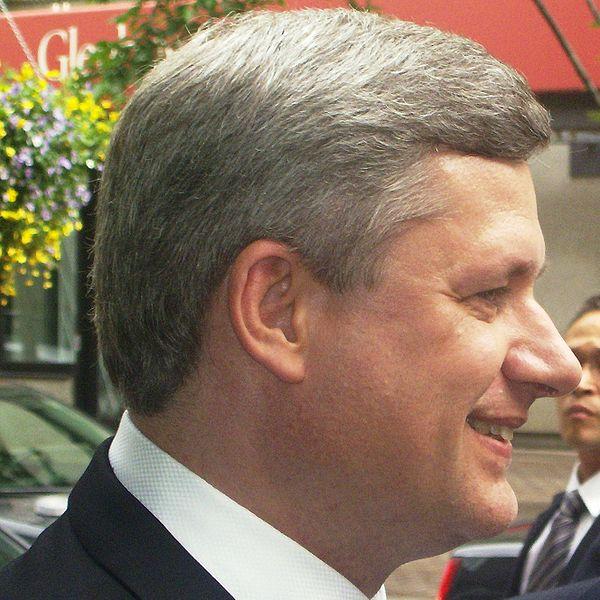
Canada’s defeat in elections for a temporary seat in the UN Security Council has implications that reach beyond being an upset for Stephen Harper’s conservative government in Ottawa. It reinforces how far most UN members are from supporting other nations that unconditionally accept Israeli behavior in the Middle East. It also, ironically, lends some support to Ottawa’s longstanding opposition to increasing the number of permanent Security Council members.
MDGs: How Far We’ve Come and What Still Has to be Done
Thanks to the UN Millennium Development Goals (MDGs), standards world leaders agreed on in 2000 to lift the poor, the sick and the hungry by 2015, professionally-attended births are at an all-time high in Africa. Benin is most improved, and even war-scarred DRC and Angola have risen to the challenge, with Angola halving maternal deaths.
Review: ‘Midnight on the Mavi Marmara’
Published less than two months after Israeli commandos boarded an international aid flotilla bound for Gaza and killed nine activists, Midnight on the Mavi Marmara is, in the words of editor Moustafa Bayoumi, “the first book about the attack,” but “will likely not be the last.” This collection of some four dozen essays from eyewitnesses and “activists, novelists, academics, analysts, journalists, and poets,” serves many purposes. Some essays are expressions of simple outrage. Others probe more deeply into Israel’s broader political strategy in the region and its human costs for Palestinians in the Occupied Territories. Author and Harvard scholar Sarah Roy’s essay offers a detailed and rigorous accounting of Gaza’s humanitarian and economic woes, while well-known academic and blogger Juan Cole’s excellent contribution emphasizes the deeper problem of Palestinian statelessness, the political fact of which the Gaza blockade and even the Israeli occupation itself are merely symptomatic.