Chevron’s claim that it didn’t get a fair shake from the Ecuadoran legal system is laughable since it was the one that insisted on moving the case from U.S. jurisdiction to South America.
The U.S. army doesn’t put some of the dirtiest fighting ever past the Taliban.
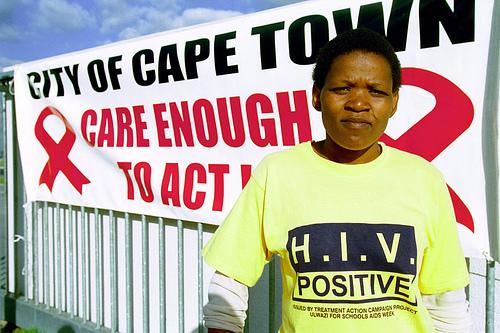
In the sweeping fashion of global development commitments, 2010 marks the year by which countries and health agencies worldwide have pledged to scale up their HIV/AIDS interventions “towards universal access” to treatment. In the more sobering reality of shifting donor priorities, funding shortfalls in 2010 may actually represent the beginning of a move away from universal access in the global HIV/AIDS response.
The August 2010 issue of NANO Magazine, highlighting nanoscale research expected to have a positive impact on the developing world, included articles focused on energy generation, disease prevention and water purification.
With controversy still raging over national health reform in the United States, the media is paying little attention to an international debate on global health policy that is of major importance to the world’s poorest people. Both debates revolve around a similar theme, which President Barack Obama neatly summarized in his recent landmark address to Congress as "the appropriate size and role of government" in the provision of health services.
As the swine flu threat level grew at the end of April, World Health Organization (WHO) Director-General Margaret Chan said, “it really is all of humanity that is under threat during a pandemic.”
The capacity of sports to contribute to social change must not be overstated but history has proven that possibilities for change do exist. Sports have changed individuals’ lives and, more importantly, contributed to and facilitated larger social change within and across societies.
Eighteen American war veterans kill themselves every day. One thousand former soldiers receiving care from the Department of Veterans Affairs attempt suicide every month. More veterans are committing suicide than are dying in combat overseas.
Standing in the student section of Penn State’s Beaver Stadium during football season always felt like witnessing a war unfold before your eyes. First the band would enter, marching in military-like formation and literally drumming up support from the crowd, while the cheerleaders would start up the most boastfully imposing chant in all of college sports: "We Are…Penn State." Then our four-star general, Coach Joe Paterno would run on the field flanked by his army of All-American linebackers and various other defensive backs, ends, and tackles because offense was always second to a strong defense in JoePa’s book. Even as a student, during perhaps the bleakest years of an otherwise dominating half-century of college football, I knew Pennsylvania State University was just as likely to be called "Linebacker U" as Penn State.