The United States has a chance to bring war criminals to justice – if it supports the International Criminal Court at the upcoming review conference in Kampala.

The Court of Last Resort
read more

The United States has a chance to bring war criminals to justice – if it supports the International Criminal Court at the upcoming review conference in Kampala.

Mexican President Felipe Calderón came to the United States last week assuming the moral high ground as a victim of U.S. drug consumption and weak gun laws. In his speech before the U.S. Congress, Calderón firmly called on the United States to take concrete steps to cut the traffic of high-caliber arms and illicit money from the United States to Mexico, and reform its immigration policies, particularly Arizona’s new anti-immigrant law. By contrast, President Barack Obama had nothing but words of support for his southern neighbor.
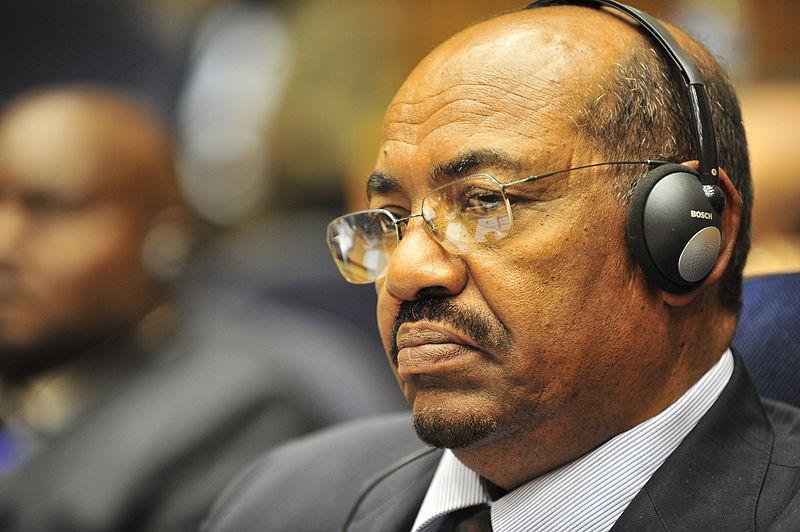
After five days of voting, the withdrawal en masse of virtually all the opposition presidential candidates and countless accusations of ballot tampering, voter intimidation, and worse, Sudan’s elections drama has drawn to an unsurprising conclusion.

Summer is always hot in Arizona, but the summer of 2010 may be hotter than any in recent memory.
As an individual concerned with events in Thailand, I am not sure if a plague-on-both-your-houses stance toward the Red Shirts (who support ousted prime minister Thaksin Shinawatra) and the Yellow Shirts (who oppose him) is enough.

When international human rights observers rounded a curve on a remote road in the southern Mexican state of Oaxaca, they found the way blocked by boulders. They decided going forward would be dangerous. But they didn’t know that going back would be deadly.

It is hard to overstate just how deeply unpopular the United States is in the Muslim world.
A 2008 poll of six majority Muslim countries found that overwhelmingly large portions of the population, ranging from 71 percent in Morocco to 87 percent in Egypt, held unfavorable opinions of the United States. A 2009 poll in Pakistan revealed that 64 percent of the public views the United States as an outright enemy.
U Win Tin is a close associate and advisor of Burmese democracy leader Aung San Suu Kyi and is also known as the chief strategist of the opposition party, the National League for Democracy (NLD). Over his lifetime, he spent 19 years in Rangoon’s Insein Prison, most of it in solitary confinement.
Social workers are fond of saying that they must start where their clients are. This basic principle of social work is not theoretical. It comes from decades of practice. Simply telling people what they should do rarely translates into their actually doing “the right thing.” So instead, social workers have turned the tables by beginning not with the desired endpoint, as determined by the social work profession, but with the client’s articulated fears and concerns.
Next month, the Organization for Economic Cooperation and Development (OECD) is expected to invite Israel to join its 30-strong club of rich, mostly Western countries pursuing a “stronger, cleaner, fairer world economy.” Accession would conclude three years of formal negotiations and almost two decades of lobbying from successive Israeli governments, with Foreign Minister Avigdor Lieberman especially keen to align his country with the world’s advanced democratic nations. OECD status will accelerate investment, raise Israel’s credit rating, and strengthen its voice in international affairs.