Uncategorized
Postcard From…Chile

Postcard From…Chile

Tremendous effort is underway to rebuild Chile after it was hit on February 27 by an 8.8-magnitiute earthquake. This tragedy was followed by seven-meter high tsunami and several less devastating after-shocks. The coastal city of Constitucion and the resort town of Iloca lie in ruins, while much of the historic center of the city of Curico is either damaged or destroyed. It’s believed that around 550 people died overall.

read more
Arms Trafficking at the U.S.-Mexico Border

Arms Trafficking at the U.S.-Mexico Border

Lately, the news from Mexico has not been particularly positive. Every day the number of victims of the ongoing turf wars in the northern border area of the country grows. In 2009, Mexico reported 7,724 drug war-related deaths,1 while in January of this year alone, the number of people killed in Ciudad Juárez reached a stunning 227. Recently, over the weekend of March 13, 2010, nearly 50 people were killed in that bloody city, including employees and family members of the U.S. Consulate. Most scholars and politicians believe that these deaths are all related to drug gang activity, implying that they are the result of in-gang struggles for control of businesses and territory; fights amongst gangs for routes, and because of clashes with the military.

read more

When Was the Last Time You Visited Iraq?

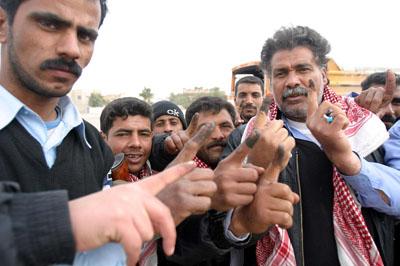
Recently, I wrote about a crew of pundits and warrior-journalists eager not to see the U.S. military leave Iraq. That piece appeared on the op-ed page of the Los Angeles Times (and in alonger version at TomDispatch.com) and then began wandering the media world. One of its stops was the military newspaper Stars and Stripes.

read more

The Case for a Union

Victor Hugo famously quipped: “[I]l existe une chose plus puissante que toutes les armées du monde, c’est une idée dont l’Heure est venue.” Here’s one such powerful idea: a multi-state union that stretches from the Fertile Crescent to the Silk Road, connecting the Indian Ocean to the Caucasus, and the Mediterranean to Central Asia – a grand political-economic-security union (precise name to be determined) that finally brings the peoples of this ‘region’ under the same banner.

read more

Music is Still the Weapon

On February 18, 1977, a thousand Nigerian soldiers surrounded the Kalakuta Republic and burned it to the ground.

As republics go, Kalakuta wasn’t very large. Only 100 or so people lived there. But the immensely popular musician Fela Anikulapo-Kuti had created this compound, in the Nigerian capital of Lagos, as a joyful and democratic space in an otherwise corrupt and dictatorial country. The sovereignty of Fela’s republic was always under threat. And even though the invaders threw his mother from the second floor on that day in 1977, and even though the soldiers cracked his skull, and even though the government jailed him for trying to defend himself, Fela continued to fight back. He used his Afrobeat music and biting lyrics as his weapon.

read more
Responding to the Honduran Coup

Responding to the Honduran Coup

As a 30-year-old Australian who had previously travelled to Guatemala and El Salvador, I decided to respond to an email listserv request for international observers in Honduras after the June 2009 coup.

read more

Sweatshops Won’t Save Haiti

The United Nations will host a Haiti donors’ conference at the end of March.

This conference will be quite different from last year’s event, of course, coming as it does on the heels of the worst earthquake to strike Haiti in two centuries. An agenda has already begun to take shape: It’s already clear that a future Haiti must be populated with environmentally sustainable, earthquake-resistant buildings, for example, and it’s also clear that the international community must do something to ease Haiti’s massive debt burden.

read more