Africa
Malawi Makes, Africa Takes?

Malawi Makes, Africa Takes?

In 2005, President Bingu Wu Mutharika of Malawi embarked on an innovative five-year solution to promote Malawi’s agriculture sector by increasing farm subsidies and allocating 10 percent of the national budget to the agriculture sector to help promote infrastructure and farm training. Despite concerns from the World Bank and the UN, President Mutharika promoted Malawi’s agriculture sector and decreased poverty from 52 percent to 40 percent while turning Malawi into a food basket not only for its people but also for export.

read more
Women’s Exclusion Worsens Somali Crises

Women’s Exclusion Worsens Somali Crises

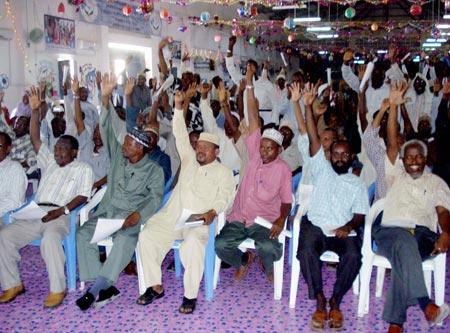
On July 22, 2011 the newly appointed Somali Prime Minister Abdiweli Mohamed Ali, a Harvard-trained professor of economics, announced his 49-member cabinet. There are only two women in it: one minister and one vice minister. Yet, Somali women and children are the primary victims of ongoing conflict and deepening drought and famine in Somalia. According to UNICEF, a child dies every six minutes in the areas hard hit by drought in the Horn of Africa. In addition, all international studies show that women and children are the most vulnerable groups in societies under stress.

read more
South Sudan’s New Democracy

South Sudan’s New Democracy

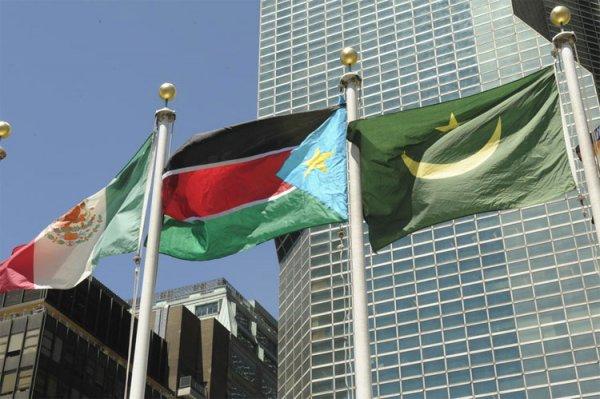
During the Cold War, Americans wondered if newborn African and Eastern European countries would become democracies. Now we assess how new democracies will live up to their professed democratic values. The world’s newest country, South Sudan, is in the unique position of being able to learn from and construct its constitution from countries that have already gone through the risky process of declaring freedom.

read more

Land ‘investment’ deals in Africa: Say ‘no way!’

The real question at the heart of the matter is for whom are Africa’s resources and who do they benefit? Africa’s resources – land, water, minerals… are for the people of Africa. Despite its rich resources, African nations are reeling from widespread hunger and poverty. In that context, to talk about who should have strategic investor status, or export guarantees, is the wrong question to ask. 

read more

Genuine Partnership or a Marriage of Convenience?

Despite official Indian denial that there is no competition between the two Asian giants (The Economic Times 2010) in Africa, India’s foreign policy swings between attempting to catch up with the Chinese, who have made major inroads in Africa over the past decade, and accommodating the aspirations of China, India and the western world in the context of India’s enduring relations with the continent. This competition centres on three major issues: energy security, access to Africa’s untapped markets and diplomatic influence.

read more
Saving Uganda from Its Oil

Saving Uganda from Its Oil

In 2006, Uganda confirmed the presence of enormous commercial petroleum reserves around Lake Albert along the country’s western border. Since then, geologists have proven at least 2 billion barrels. With only about 25 percent of the region explored, some reports indicate that there could be as much as three times that amount – enough to make Uganda a major player in the African oil industry. The oil is set to begin flowing later this year, or perhaps in early 2012, with production targeted at around 200,000 barrels per day.

read more
Game Changers in Global AIDS Fight

Game Changers in Global AIDS Fight

This week marks the 30th anniversary of the first reported case of AIDS, and world leaders are meeting at the United Nations to review progress in the fight against the epidemic. The battle is far from won. But new game-changing research, as well as documented successes in recent years, makes it possible to chart a clear course for significant victories in the years ahead.

read more