Fighting corruption is a proven means to reduce inequality. But the issue has often been co-opted by elites looking to do just the opposite.
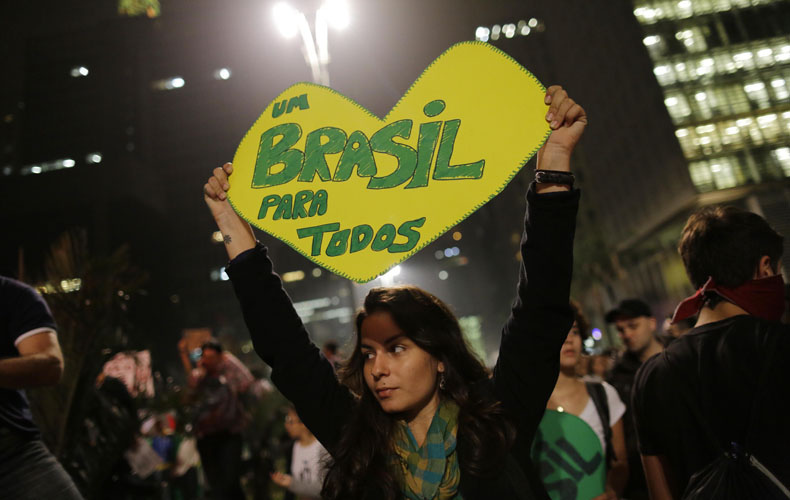
What the World Cup Can Teach Progressives About Corruption
read more

Fighting corruption is a proven means to reduce inequality. But the issue has often been co-opted by elites looking to do just the opposite.

Like the United States, Brazil has a long way to go with its response to global warming.

Thousands of poor Brazilians were evicted from their homes to build multimillion-dollar World Cup stadiums that may never be used again. Now Brazilians are fighting back.

China is taking advantage of its growing trade surplus in Latin America to rally support for its positions at the United Nations.

Forced evictions are happening throughout Brazil in advance of the 2014 World Cup and 2016 Olympics, exacerbating the country’s growing inequality.

Without a doubt, the 68th UN General Assembly will be remembered as a watershed. Nations reached an agreement on control of chemical weapons that could avoid a global war in Syria. The volatile stalemate on the Iran nuclear program came a step closer to diplomacy....

As President Barack Obama arrived in Berlin last month to deliver a speech at the Brandenburg gate, many Germans were already expressing concern about revelations of NSA spying. Little did they know that they were viewing the tip of the iceberg and that tensions in...
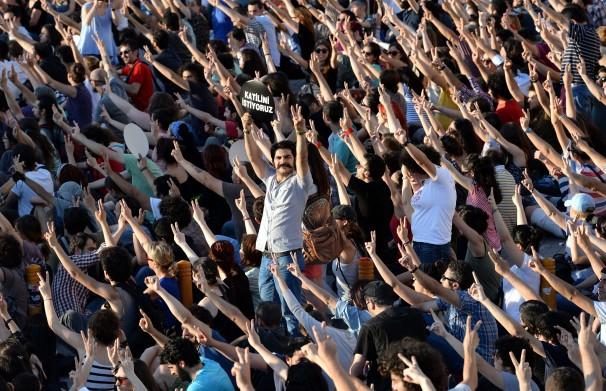
The lesson from the streets of Brazil, Turkey, and the Arab world is to avoid underestimating half-baked social movements still in their infancy. With technological advancements and opportune conjunctures, the underdogs of yesterday can quickly turn into the makers of tomorrow. Not every nascent movement cascades into a full-blown revolution, but the pathfinders whose thoughts and actions carry forward to make history must get their due recognition.

With a million people demonstrating in the streets of cities throughout Brazil, everyone’s scrambling to understand how a 20-cent bus fare hike turned into a social revolt.
The mood inside the Windsor Barra hotel seemed more buoyant than in many of the over 3,000 other side-meetings taking place parallel to the Rio+20 UN Conference on Sustainable Development (UNCSD). Here, at a suburb far from the favelas shadowing Copacabana or Ipanema, CEOs and other top officials from some of the world’s largest corporations patted each other’s back and exhorted each other to be even more ambitious. Speaker after speaker spoke of how indispensable business is to building the ‘green economy’ – the new economic model that UN officials and developed-country governments were aggressively promoting in this conference.