The president of Haiti—a country with no external threats, a history of military repression, and an abundance of more pressing problems—is rebuilding the once-banished Haitian military.
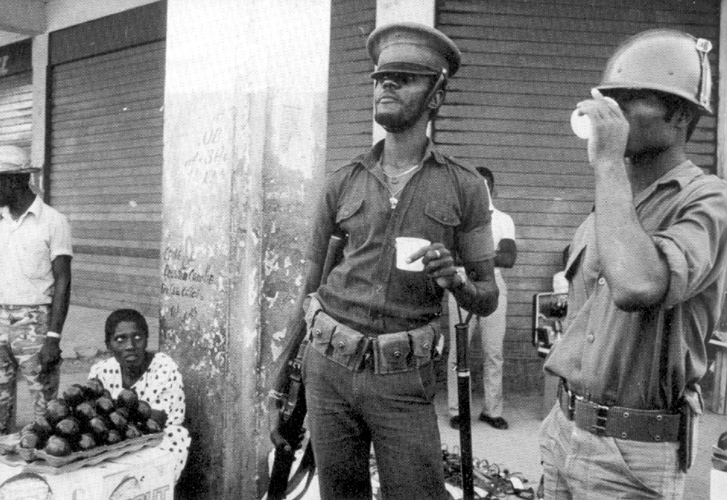
Harkening Back to Dark Days in Haiti
read more

The president of Haiti—a country with no external threats, a history of military repression, and an abundance of more pressing problems—is rebuilding the once-banished Haitian military.

The migration of highly skilled workers can pay dividends for immigrants and their employers, but it produces losers as well.

Many more Haitians will die from cholera, a disease brought to their country by the very people who were supposed to be saving them from disaster.

Four years since its devastating earthquake, progress in Haiti is slow and reconstruction efforts are lacking at best.
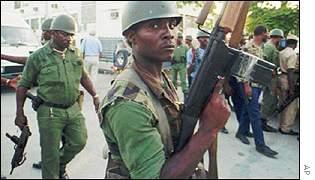
Haitian President Michel Martelly finds himself in an increasingly difficult position on the military question. In mid-May, several former army officers met with Martelly and urged him to uphold his presidential campaign promise that, if elected, he would reintroduce the army.
But this is one pledge the Haitian president should renege on.
Dilma Rousseff interrupted the speech of Barack Obama. The President of the United States was speaking about the advances of various countries in Latin America, commenting that now there exists “a prosperous middle class” that represents a business opportunity for companies from his country. “Suddenly, they are interested in buying iPads, interested in buying planes from Boeing.” “Or Embraer,” interjected Dilma, yielding applause.

If education were made more of a priority, Haiti’s future would look much brighter.

Since the catastrophic January 2010 earthquake, Haitians have seen little improvement in their standard of living. More than 500,000 people remain displaced, the cholera epidemic worsens by the day, the living conditions for women and girls in tent camps are increasingly dangerous, there’s been lack of progress on issues of governance and land tenure, and the ineffectiveness of foreign aid have stalled Haiti’s recovery. Haitians are disillusioned with themselves, their government, and the international community.
Documents from the U.S. embassy in Port-au-Prince paint a disturbing picture of American coercion of a struggling Haiti between 2004 and the month following the 2010 earthquake.

Georges Marie is a proud and angry Haitian lawyer who lost her husband in the earthquake. As she mourned, the humanitarian industry exploded. She watched with concern as Port au Prince’s narrow streets became clogged with white Land Rovers, each stamped with an aid agency logo on the driver’s door. It still rankles her when the humanitarians dine and dance in a four-star restaurant overlooking the Place Boyer, a public square now strung with tarps, home to some of the million-plus people still displaced from the 2010 earthquake.