Empires decline due to moral decay from within. Ten years after the invasion of Iraq, our nation is looking at the moral abyss. If lies have delivered us to this place, then only the truth will begin our journey back.
Right-wing Israeli governments and their U.S. supporters deserve blame for many policies that have led to needless human suffering, increased extremism in the Islamic world, and decreased security, as well as rampant violations of international legal principles. The U.S. invasion of Iraq, however, is not one of them.
Although the breathtaking violence that attended Iraq’s descent into sectarian nightmare has been well documented in many retrospectives on the 10-year-old war, what’s often overlooked is that by far more mundane standards, the United States did a spectacularly poor job of governing Iraq.
Emphasis, as always, added.
US troops left behind a devastated, tortured Iraq. Our real obligation, to the people of Iraq and the region and the rest of the world, is to transform our government and our country so that these resource-driven wars, shaped by lies and fought for power and for empire, whether in Iran or somewhere else, can never be waged again.
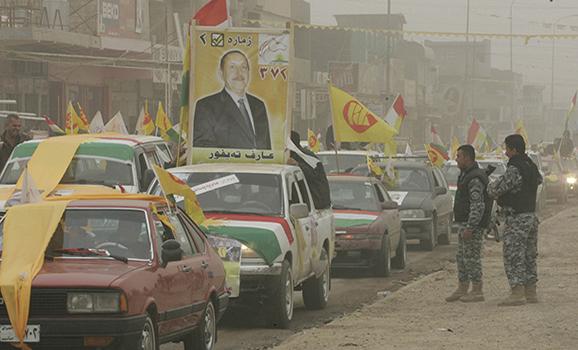
Today, Iraqi and Syrian Kurds enjoy unprecedented autonomy from Baghdad and Damascus, and the prospects of an independent Kurdish state are real. Despite the Kurds’ gains, the Kurdistan Regional Government (KRG), led by President Massoud Barzani, finds its semi-autonomous state in northern Iraq at several geopolitical fault lines. Barzani must tread carefully in this volatile region to safeguard the Iraqi Kurds’ interests while pursuing independence from central Iraq.
Ten years ago, I wrote a series of articles for the Foreign Policy in Focus website in which I put forth a series of arguments against the Bush administration’s push for a U.S. invasion of Iraq prior to the fateful congressional vote authorizing the illegal, unnecessary, and ultimately disastrous war.
Although the prospects for an independent state in Syrian Kurdistan remain dim, unprecedented Kurdish autonomy will likely result from the conflict. The implications extend beyond Syria’s borders as various governments and non-state actors have strong, and often conflicting, interests in the political fate of Syria’s Kurds and the territorial integrity of the Syrian state.
As with Iraq, Syria’s link to its past as the cradle of civilization is threatened.
Al Qaeda in Iraq mounted its deadliest attacks of the year.