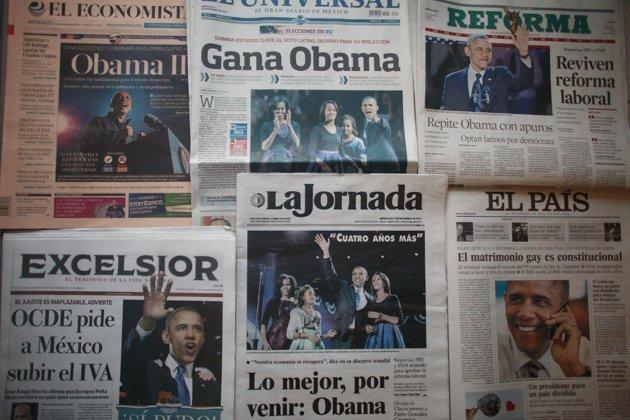
Latin America itself got scarcely a mention in the U.S. presidential campaign, but a new generation of voters has put it definitively on the agenda. Indeed, the rigid divide between “Latin America” and the United States needs to be revised.
“When I saw the rockets being fired at Mario’s house, I swore to myself that the Americans would pay dearly for what they are doing. When this war is over a much wider and bigger war will begin for me: The war that I am going to wage against them. I know that this is my real destiny.” Fidel Castro wrote these words in 1958, the decisive year of his guerrilla war against Dictator Fulgencio Batista.
I had the privilege of traveling to Venezuela and witnessing the country’s presidential Oct. 7 elections and the South American country’s extraordinarily active and engaged citizenry. An impressive 81 percent of the electorate participated in a transparent and secure electoral process that former president Jimmy Carter recently referred to as the best in the world.
Out of deference to its founding principles of respect for sovereignty, the United Nations has failed to protect populations from slaughter.
When the guerrillas were around, I fought for what was mine. When the paras came, I fought for what was mine. A guerilla commander once said to me, “Brother, you have to pick sides.” And I said, “No, I choose no side.” I was neither a para nor a guerrilla.
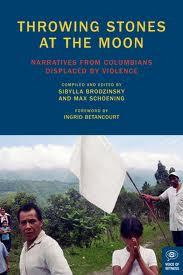
Colombia has endured one of the longest-running civil conflicts in the Western Hemisphere. Throwing Stones at the Moon: Narratives from Colombians Displaced By Violence, edited by Sibylla Brodzinsky and Max Schoening, is a compelling compilation of personal accounts of the tragedies and abuses suffered by everyday Colombians during the country’s civil war.
Nations trying to come to terms with violence from their recent pasts have a difficult road ahead, and the Andean country of Peru is no exception. The country is grappling with a host of issues stemming from its violent struggle against insurgent movements in the 1980s and 1990s.
Minutes before he started to sew his mouth shut, Jorge Alberto Parra Andrade explained his rationale to me: “Essentially GM gave us a choice: to die of hunger or to die waiting for them to solve this problem.” Parra is one of 68 injured workers fired by General Motors Colombia who started a protest in front of the U.S. Embassy in Bogotá one year ago, on August 1st, 2011.
The Peruvian Supreme Court has handed down a highly controversial sentence in a case involving the members of the Colina Group death squad. According to human rights defenders and the victims in the relevant cases, the sentence is a major step backward in Peru’s tortured quest for truth and justice in cases of egregious human rights violations.
A recent sentence for members of a death squad is a major step backward in Peru’s tortured quest for truth and justice in human rights violations.