Afghanistan
Accountability and Insurgency in Afghanistan

Accountability and Insurgency in Afghanistan

Although the war in Afghanistan—with its tally of U.S. combat deaths now exceeding 2,000—has largely faded from the news, it is useful to consider why the conflict is so intractable. Why has a campaign that initially seemed so hopeful resulted in a country that is politically fractured and increasingly deadly for Afghans and foreign militaries alike?
read more
Feminism as Counterterrorism?

Feminism as Counterterrorism?

The most prominent and unequivocal public articulation of an alliance between feminism and counterterrorism came at the dawn of the U.S. war in Afghanistan, when Laura Bush argued that “the fight against terrorism is a fight for the rights and dignity of women.”

read more
On Drugs and Democracy

On Drugs and Democracy

The UN Office of Drug Control (UNODC) has thoroughly documented the violence, crime, and corruption linked with the worldwide heroin and opium trade. The U.S. news media report every day on the mayhem and corruption of government officials caused by the drug wars in Mexico, Colombia, and other points south of our border. In Afghanistan, the Taliban tax the opium trade and protect poppy farmers from eradication, fueling the insurgency and our 11-year war.

However, these problems are all consequences of drug prohibition, not of the drugs themselves.

read more
Morals in the Age of One Superpower

Morals in the Age of One Superpower

Interjecting the consideration of moral values into foreign policy decisions is, unfortunately, often ridiculed by the political establishment of Republicans and Democrats in the United States. For instance, one supporter of Bill Clinton in 1992, Michael Mandelbaum, expressed how foolish it is to construct policies based on moral values.

read more
Our Own Worst Enemy

Our Own Worst Enemy

The brazen terrorist assault on Kabul on April 16 was the biggest attack on the Afghan capital in the last decade. For some 18 hours, strategically perched Taliban militants linked to the Haqqani network fired on government buildings, embassies, and foreign military bases. A total of 51 people died, including 36 militants. Some 74 were wounded in Kabul along with three neighboring provinces where government and military targets came under synchronized attack.

read more
Review: The New Protectorates

Review: The New Protectorates

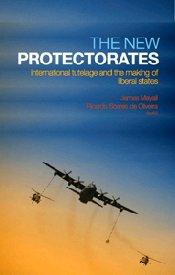
The New Protectorates: International Tutelage and The Making of Liberal States, edited by James Mayall and Ricardo Soares de Oliveira, brings together a variety of authors to tackle the complexities of state-building and new protectorates in an era categorized by neoliberal economic policies, globalization, and the growing demand for democratic cooperation on both the national and transnational level. 

read more