Russia
The Not-So-Great Game

The Not-So-Great Game

The current Great Game centers on Iran and the efforts particularly of the United States and Israel to prevent the country from going nuclear. The 19th-century battle over turf and influence in Central Asia lasted decades and sent armies slogging their way across high mountains and unforgiving plains. The current standoff, by contrast, could escalate in a matter of hours, if Israel launches a preemptive strike on Iran’s nuclear facilities and Iran retaliates directly or through proxies.

read more

Nigeria with Nukes

John F. Kennedy essentially bought his way into politics. His father, the wealthy Joseph Kennedy, picked out a nice congressional seat in Massachusetts and basically paid the occupant of the position to step down and run instead for the Boston mayoralty. JFK’s father then tried to pay off the Democratic frontrunner to drop out of the race, and when that didn’t work, persuaded William Randolph Hearst not to run any of the candidate’s ads or pictures in Hearst-owned newspapers. Joe Kennedy even paid a janitor named Joseph Russo to run in the race in order to dilute support for another leading candidate named Joseph Russo. Recognizing the importance of PR, the Kennedy family contributed $600,000 – an enormous sum in 1946 – for a children’s hospital in the district where JFK was running for office.

read more
Russians United against United Russia

Russians United against United Russia

In the past two weeks a number of different rallies took place in Russia. The most memorable of these, on December 10, was the biggest protest in Russia since the fall of communism. People in cities all around Russia went onto the streets. In Moscow, estimates of the number of protestors ranged from 25,000 to 100,000. Although organized by a range of groups and political parties with few common goals, the protests are united around one issue: the alleged vote rigging by the United Russia party. 

read more
Review: Soviet Fates and Lost Alternatives

Review: Soviet Fates and Lost Alternatives

Why did the Soviet Union come to an end? Was the Soviet system reformable? Were there historical alternatives to Stalinism? These are the questions that Stephen F. Cohen raises in Soviet Fates and Lost Alternatives: From Stalinism to the New Cold War. In a series of seven essays, Cohen challenges conventional assumptions on the course of Soviet and post-Soviet history, examining the fates and lost opportunities of Stalin’s preeminent opponents.

read more
U.S. and Russia: Where’s the Reset?

U.S. and Russia: Where’s the Reset?

When President Barack Obama took office in January 2009, U.S.-Russian relations were strained and delicate. Arms control agreements had all but disintegrated and acrimonious conflict had largely displaced cooperation. Indeed several observers, including Mikhail Gorbachev, even went so far as to proclaim the emergence of a new Cold War.

read more
Review: The Russian Quest for Peace and Democracy

Review: The Russian Quest for Peace and Democracy

Canadian sociologist Metta Spencer’s career in Soviet-Western peace activism takes book form in her account of decades of democratic struggle in Russia, The Russian Quest for Peace and Democracy. Drawing on a broad spectrum of activist and reformist perspectives from both sides of the Iron Curtain, Spencer dispels three false beliefs in her colorful, informative account of how the Cold War really ended.

read more
Libya: Where Are the BRICs?

Libya: Where Are the BRICs?

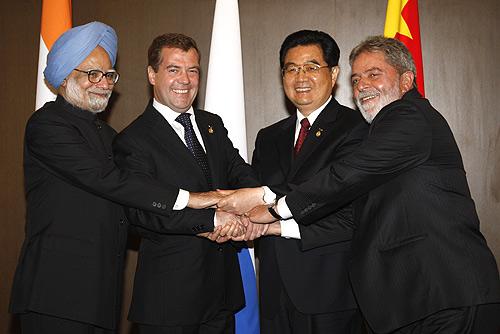
Following the vote at the UN Security Council, the United Kingdom, France, and the United States have embarked on military action against Gaddafi’s forces in Libya. They have been careful to include a few Arab states in this new coalition of the willing. But these three countries are the driving force behind the imposition of a no-fly zone and the attacks on the government’s military positions and forces. Yet among the permanent and non-permanent member of the Council who were asked to authorize “all necessary measures” to protect civilians rebelling against the regime, the BRIC powers of Brazil, Russia, India, and China were conspicuously absent. 

read more