Van Pao’s “secret army” was financed by the CIA as part of the war against North Vietnam. Is the U.S. also tolerating and empowering drug lords in Afghanistan?
Given the title of this week’s World Beat, perhaps you expected an essay on North Korea or another vilified U.S. adversary and violator of all human decency.
Actually, I was referring to Jon Kyl. Those who dismiss the value of negotiating with North Korea insist that the country makes unreasonable demands, never has any intention of compromising, and violates any agreement that it ultimately signs. Funny, this sounds a lot like the hard-line Republicans in the last Congress.
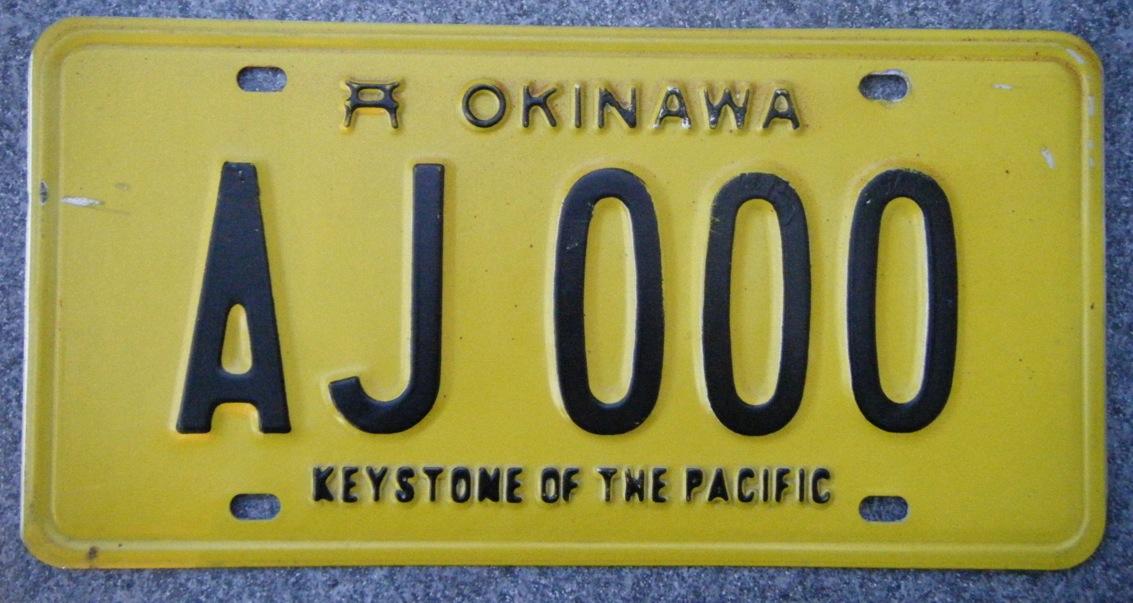
Watts. Cleveland. Newark. Detroit. In the 1960s and early 1970s, the inner cities of the United States burst into angry flames. One riot that is all-too-often forgotten from this list is the uprising that occurred in the Okinawan town of Koza when the island was still occupied and administered by the United States.
The last 70 years of modern warfare have been filled with atrocities, from the first bomb that exploded the tranquility of Pearl Harbor on the morning of December 7, 1941 to the advent of large-scale saturation bombing of civilian centers culminating in the atomic bombings of Hiroshima and Nagasaki, from the terror attacks of 9/11 to the ill-advised invasion of Iraq and subsequent quagmire. In his ambitious and comprehensive comparative study Cultures of War, historian John Dower exposes many striking similarities between the thoughts, actions, and attitudes of Imperial Japan, the United States, and radical Islamists.
The exchange of artillery fire between South and North Korea on 23 November, 2010 had predictable results – a great increase of tension on the peninsula, a show of force by the United States, and a torrent of uninformed media articles and pontificating from the security industry.
Is China smartening up its environmental and social act in Africa? It certainly wants to be seen as doing just that. One telling example was the recent Chinese government-sponsored ‘top Chinese enterprises in Africa’ competition, won by China Road and Bridge Corporation [CRBC].
Seconds before I appeared on Al-Jazeera International Sunday night, the producer informed me that South Korea, despite pleas from both Russia and China to cancel the live fire artillery drills, had in fact started the exercises. Having been to North Korea several times, and knowing how their worldview centers on the right to defend their sovereignty, I feared the worst.
Cultures of War should be mandatory reading in our military academies and in government.
In recent memory, Afghanistan, Iraq, Iran, and Pakistan have received the lion’s share of the attention of U.S. policy in Central Asia. This is not surprising. It would be hard to ignore two wars and the issue of preventing nuclear proliferation either by Iran or from an unstable Pakistan. Yet, U.S. foreign policy has omitted a region that has sparked conflict between two nuclear armed states as recently as 1999. That region is Kashmir.
The 2G spectrum scandal cost India as much as $40 million.