Afghanistan

Debt and Empire

To: General Petraeus, Langley HQ
From: Operative 650, Kabul office
Re: Memo XE1955

General Petraeus:

First, I would like to introduce myself. I was in close communication with your predecessor, Leon Panetta. My memos on outsourcing targeted killings to the Chinese and producing a new TV program Top Terrorist were well-received. Or, at least, I did not receive any indication that Leon found them objectionable, so I assume that they are still “in process.”
read more
The Dual Failure of Night Raids and Drones

The Dual Failure of Night Raids and Drones

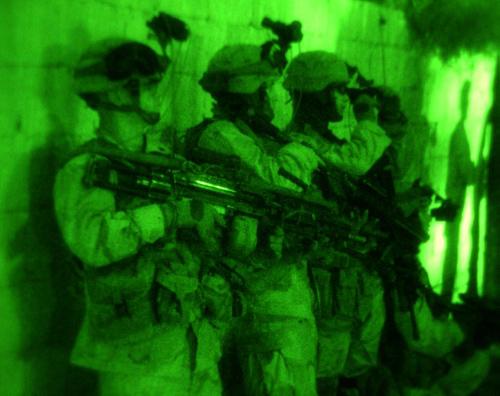
Adapting to an unconventional war, the United States and its allies picked up some new tactics in Afghanistan and Pakistan. In the past few years, drone attacks and night raids have become staples of the effort to combat al-Qaeda and the Taliban. The announcement of a new counterterrorism strategy and the beginning of troop withdrawals from the conflict suggest that these methods are poised to become fixtures of how the U.S. combats global terrorist threats.

read more
Afghanistan: Anatomy of a Hit

Afghanistan: Anatomy of a Hit

The July 12 assassination of Ahmed Wali Karzai in Kandahar is one of those moments when the long and bloody Afghanistan war suddenly comes into focus. It is not a picture one is eager to put up on the wall.

read more
The Courtship of Iran and Pakistan

The Courtship of Iran and Pakistan

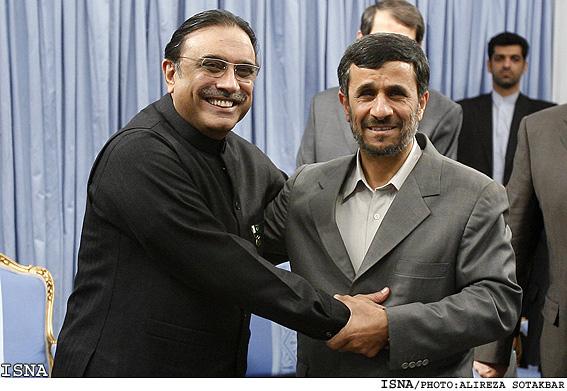
Pakistani President Asif Ali Zardari paid a second visit to Tehran last weekend after having been there only three weeks ago. Official reports by Pakistani and Iranian sources broadly characterized the visit as “part of the ongoing process to strengthen bilateral ties, step up consultations with countries in the region for peace and stability at a time when tension was developing in some parts and for promoting peace and stability in Afghanistan and fighting militancy.” But this rationale hardly warrants two head-of-state level official visits in such a short span of time. After all, lower-level officials could have dealt with such concerns, as in the past.

read more
Review: The Wars of Afghanistan

Review: The Wars of Afghanistan

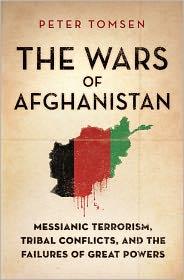
Drawing on newly released documents, personal anecdote, and keen analysis, former U.S. Ambassador Peter Tomsen relates a brutal portrait of Afghanistan from its origins to the present day. That present is as dark as the recent past. Despite the glum historical perspective, Tomsen’s final analysis in The Wars of Afghanistan: Messianic Terrorism, Tribal Conflicts, and The Failures of Great Powers leaves a ray of hope.

read more
War Fatigue and the Un-Critical Critics of War

War Fatigue and the Un-Critical Critics of War

From Iraq to Afghanistan to Libya, the first decade of the 21st century has solidified the U.S. reputation as the energizer bunny of war. While these conflicts continue to rage on, there are a growing number of signs that even the United States has a limit to how much war it is willing to wage.

read more
Reduce Corruption, Defeat the Taliban

Reduce Corruption, Defeat the Taliban

The possibility of a negotiated settlement for the 10-year war in Afghanistan finally gained some traction when Secretary of State Hillary Clinton announced a political surge in February. Since then President Obama and other prominent officials have refuted the notion that the conflict can be resolved by military means alone. The goal is to create political solutions led and agreed upon by the Afghan government and the insurgency, and acknowledged by major regional players including Pakistan.

read more
Reorienting U.S. Security Strategy in South Asia

Reorienting U.S. Security Strategy in South Asia

Positive movement in the India-Pakistan relationship would go a long way to stabilizing the region. Although transnational terrorism remains a serious concern, it does not carry the same existential threat as does the risk of a regional nuclear war. Reducing Indian-Pakistani tensions will alleviate the need for Pakistan to continue its support for terrorist proxies and bring their national security interests more in line with those of the United States. Movement on this underlying issue will have a positive impact on many other regional concerns and help bring to an end the chronic instability that has plagued the region for the past 50 years. 

read more