Despite its “peace constitution,” Japan has a growing military footprint.

Does Japan Aspire to be a Superpower?
read more

Despite its “peace constitution,” Japan has a growing military footprint.

Washington and Tokyo remain committed to growing the U.S. military footprint on the island of Okinawa — whether Okinawans like it or not.
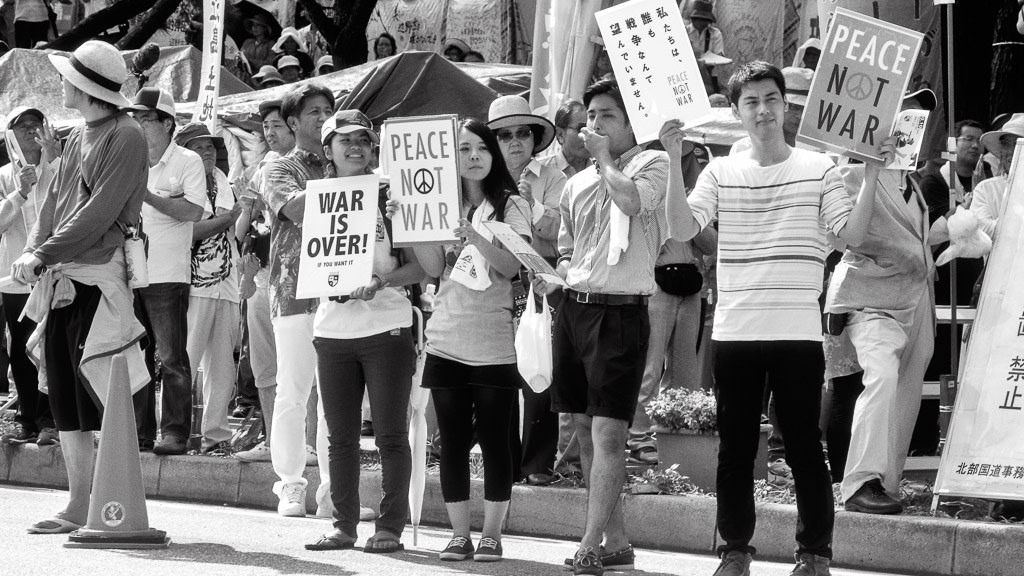
With its pacifist constitution (literally) beaten down into irrelevance, Japan is in the throes of an identity crisis.

In the Philippines, the grandson of a despised collaborator has endorsed the remilitarization of his country’s former occupiers — by the grandson of a war criminal, no less.

Despite intense crackdowns, activists on the Japanese island of Okinawa continue to resist the construction of new U.S. military bases.

Despite its peace constitution, Japan boasts one of the largest militaries in the world.
The Japanese government is on the verge of abandoning its historic commitment to pacifism. The current prime minister, Shinzo Abe, has made constitutional revision a major plank of his reform agenda. Coming to power in September 2006, Abe said that he would aim for a constitutional revision within five to six years. The central focus of attention is Article 9, in which Japan renounces the sovereign right to wage war. In May 2007, with relatively little fanfare, the Japanese Diet passed legislation to hold a national referendum to revise the constitution and amend Article 9.