As Ukraine reaches a breaking point, there’s a lot more to discuss about U.S. policy than a simple F-bomb.

Nuland: The Message Beneath the Vulgarity
read more

As Ukraine reaches a breaking point, there’s a lot more to discuss about U.S. policy than a simple F-bomb.

Russia’s President Putin may have induced Ukraine’s President Yanukovych to crack down violently on protesters.
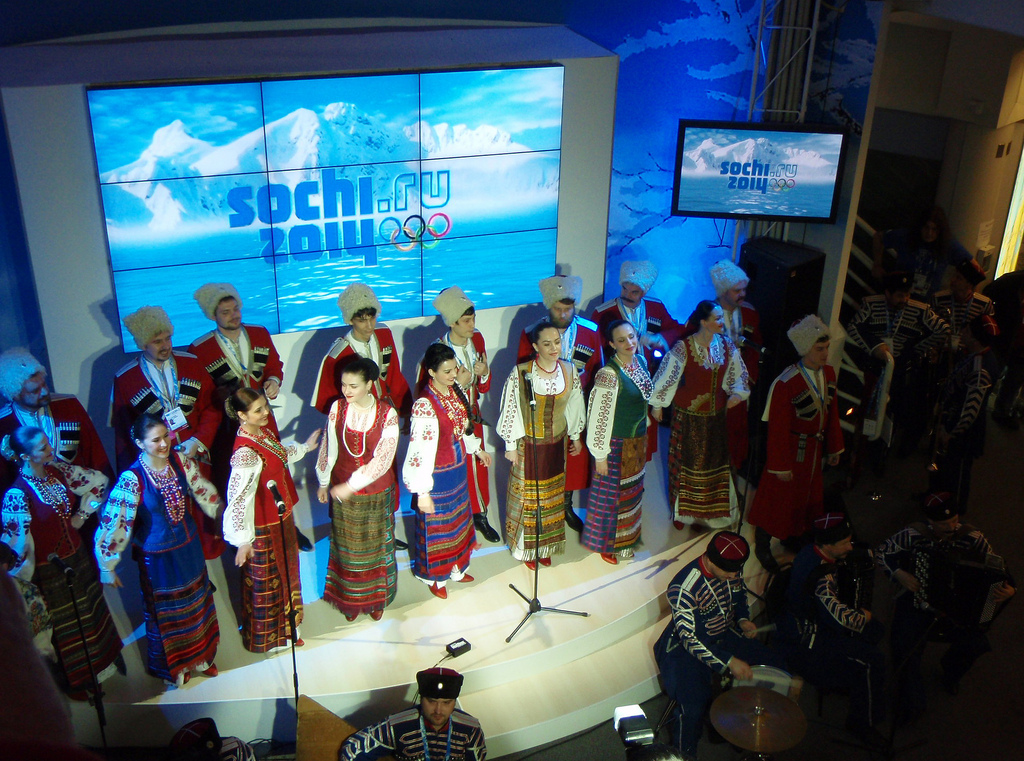
The Winter Olympics in Sochi have brought renewed scrutiny to vulnerabilities that could undermine Russia’s ongoing ambitions for international prestige.

Clashes of colors — red shirts vs. yellow shirts in Thailand, a faded orange revolution in Ukraine — have many people reaching for the rainbow in response.

We don’t have many Nelson Mandelas left, and we don’t really like the more pedestrian politicians that we’ve been saddled with.

Cross-posted from AjamuBaraka.com. In his recent op-ed in the New York Times, Vladimir Putin raised hackles among the talking-heads across the U.S. when he questioned the wisdom of President Obama’s evocation of the narcissistic idea of “American exceptionalism.”...

On Sept. 8, Secretary of State John Kerry made the offhanded suggestion that if Syrian President Bashar al Assad were to "turn over every single bit of his chemical weapons to the international community in the next week," the United States would call off its plans to...

With even Pope Francis wondering, “If someone is gay and he searches for the Lord and has good will, who am I to judge?” it would appear that the world has reached a milestone in gay rights. However, a quick trip to Russia would quickly confirm that this progress is...
Will the Black Sea flooding be President Putin’s Katrina?

In September 2011, Vladimir Putin announced a program to begin offshore oil and gas exploration and drilling in the Russian Arctic. Putin is also interested in creating new sea terminals, which he said would rival the Suez and Panama Canals. In 2008, the U.S. Geological Survey (USGS) estimated that 13 percent of the world’s undiscovered oil and 30 percent of the world’s undiscovered gas lay beneath the Arctic Seas. The United States, Canada, Norway, Greenland, and Russia, which make up the Arctic 5, are each interested in tapping these Arctic energy reserves.