How and why the U.S. assures an endless supply of “terrorists” to fight and “enemies” to destroy.
Q. So What Are You Fighting For? A. Ah’m Fightin’ Cause Yore Here
read more

How and why the U.S. assures an endless supply of “terrorists” to fight and “enemies” to destroy.

Among the batch of classified diplomatic cables recently released by the controversial whistle-blowing website WikiLeaks, several have highlighted the vast extent of the financial infrastructure of Islamist terrorism sponsored by key U.S. allies in the ongoing “War on Terror.”
This past summer, WikiLeaks, an on-line source of anonymous whistle-blower revelations, unveiled damning information about the war in Afghanistan and its “official portrayal.” Sidebar revelations also cast doubt on Pakistan’s alliance with the United States, charging Pakistani intelligence agencies with “aiding insurgents.” Pakistan and the United States forcefully denied any chink in their “strategic partnership.”
Terrorist plots are suddenly everywhere. In Baltimore last week, a 21-year-old construction worker tried to blow up a military recruitment center. In late November, federal law enforcement officials arrested a Somalia-born teenager for plotting to bomb a Christmas tree-lighting ceremony in Portland, Oregon. In October, a jury found the Newburgh Four guilty of planning to bomb two synagogues in the Bronx.
In all three cases, the major accomplice was not al-Qaeda or the Taliban. It was the FBI.

Talk about return on investment. When it comes to low-tech attacks, will governments ever get the, uh, point?
Its uniqueness and unreality render it useless as a justification for torture. Perfect for a movie, though.

The recent rash of charges against Somali-Americans on “conspiracy to provide material support” to al-Shabaab, a Somali rebel group on the U.S. terrorism list, seems designed to send a clear message that any support for the militants will lead to criminal prosecution. It also demonstrates the ubiquitous presence of law enforcement in these communities.

Two characteristics of U.S. public diplomacy stand out in the wake of the 9/11 terrorist attacks: the creativity, resourcefulness, and range of the various strategies employed, and their complete and utter failure.

Just about everything you hear about Cuba in the U.S. media is a lie.
I learned that from the moment my TACA Airlines charter jet landed in
Havana last Sunday. It was filled with Cuban-Americans returning to
their homeland carrying clothing, DVDs, microwave ovens, electronic
games, and other consumer goods missing from the Cuban market. I’d
always read that the “Miami Cubans” hated the very thought of
socialist Cuba. So I was surprised and even a little shocked when the
entire plane burst out in loud applause when we touched down.
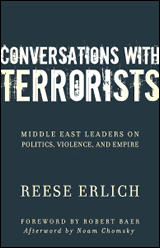
Stories on Middle East terrorism fill the headlines. But if this Washington Post story is typical, read journalist Reese Erlich’s book to know where truth lies: “U.S. military teams and intelligence agencies are deeply involved in secret joint operations with Yemeni troops, including the U.S. military’s clandestine Joint Special Operations Command, whose main mission is tracking and killing suspected terrorists.”
Who are these “suspected terrorists”?